




Real estate investing in Nueva Ecija has moved from a fringe idea to a mainstream consideration for buyers looking beyond Metro Manila. Long known as the Rice Granary of the Philippines, this landlocked province in the Central Luzon region is now drawing attention for reasons beyond its agricultural output: new expressways, a diversifying and growing economy, and housing options that remain within reach for middle-income families. We’ll look at what is driving that interest and what buyers should weigh before committing to a property in the province.
Why Nueva Ecija is drawing real estate investors
Nueva Ecija’s real estate market is increasingly driven by a growing population, now estimated at over 2 million residents across its cities and towns. That population growth, paired with economic growth of 5.7 percent in 2024, has widened the base of both renters and homebuyers looking to build a life in Cabanatuan City, Nueva Ecija. Provincial officials continue to court business opportunities as part of a broader push to attract investors, offering tax incentives and streamlined business registration processes designed to shorten the time it takes to open a business locally. For individuals seeking property outside the congestion of Metro Manila, this combination of population growth and institutional support has made the province harder to overlook. Property values in Nueva Ecija also start from a lower base than in Metro Manila and other major cities in Central Luzon, which gives early buyers more room to benefit as demand catches up with supply over the coming years.
Benefit from the province’s strategic location
Nueva Ecija sits inland as a landlocked province within the Central Luzon region, with Palayan City serving as its capital city. Its strategic location places it in close proximity to several neighboring provinces, including Tarlac, Pampanga, and Bulacan, as well as Nueva Vizcaya to the north via Dalton Pass. This convenient location gives residents easy access to both Metro Manila and northern Luzon without requiring a move to either. Major highways connect the province to the rest of the region, including the North Luzon Expressway and the Subic-Clark-Tarlac Expressway, which together make the province conveniently located for buyers who need to commute for work or business while living somewhere more affordable than the capital.
Infrastructure projects reshaping investing in property in Nueva Ecija
Infrastructure developments have a direct impact on property appreciation in Nueva Ecija, and the clearest example is the Central Luzon Link Expressway, which reduces travel time between Cabanatuan and Tarlac from about 70 minutes to just 20 minutes. Upcoming infrastructure projects promise to further improve connectivity and property values across the province. San Jose City Airport is currently being upgraded to accommodate larger aircraft, a move expected to support tourism and business travel. The National Irrigation Administration is also improving irrigation systems that support the province’s agricultural sector, while telecommunication companies continue expanding coverage in more towns. Buyers researching investing in property in Nueva Ecija should note that properties near major thoroughfares typically yield higher residential and rental demand than those farther from these corridors, since real estate demand tends to rise alongside ongoing infrastructure projects.
Nueva Ecija’s economy beyond rice farming
Nueva Ecija is widely known as the Rice Granary of the Philippines, and for good reason: it remains one of the largest rice producers in the country, aided by fertile soil and a climate favorable to agriculture. Beyond rice, the province grows a wide variety of agricultural products, including fruits and vegetables, and has substantial agricultural land suited to agribusiness ventures such as processing plants, cold storage facilities, and consolidation centers that serve farms across the region. These ventures give investors an entry point into the province’s economy that does not require direct farming experience, since much of the opportunity lies in logistics and supporting infrastructure rather than cultivation itself.
Yet the province’s economy is diversifying beyond agriculture. Services now account for 49.3 percent of Nueva Ecija’s economic output, pointing to growth across various sectors, including retail, logistics, and light industry. The province is also home to significant mineral resources, including gold, copper, and manganese, and to the world’s largest solar farm currently in development, both of which underscore its expanding economic base. This diversification has helped attract institutional investment: the Board of Investments recently post an approved new housing developments totaling approximately ₱1.35 billion, a signal of confidence in the province’s residential market.
The real estate market in Cabanatuan and San Jose City
Cabanatuan City is the commercial capital of Nueva Ecija, home to a mix of commercial centers, malls, and commercial strips that have grown alongside the city’s population. Rental demand is increasing in urban centers like Cabanatuan and San Jose City, driven by students, young professionals, and families relocating for work.
Educational institutions such as AMA Computer Colleges add to this demand, drawing students who need housing near campus. San Jose City, meanwhile, continues to develop its own commercial base, supported by essential establishments that serve both residents and travelers passing through on their way to northern Luzon. Overall, real estate development in Nueva Ecija now spans residential subdivisions, commercial spaces, and agro-industrial ventures, giving the province a broader market than its agricultural reputation suggests.
Housing options for families seeking affordable property
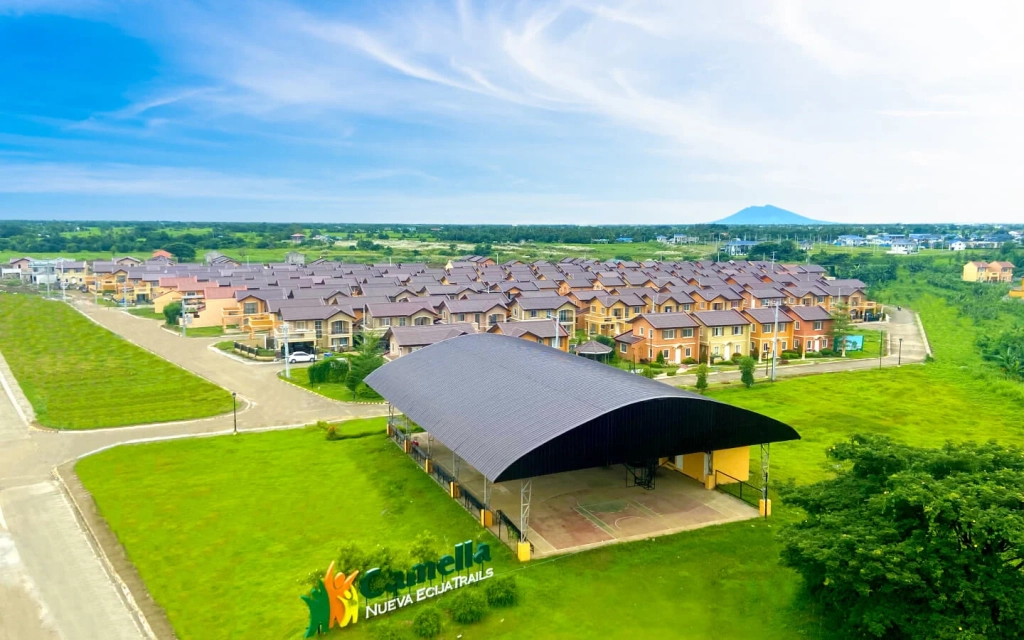
For families seeking a home outside Metro Manila’s price range, Nueva Ecija offers affordable housing options starting at around Php 2 million, a price point that has made the province attractive to first-time buyers. Developers have responded with a range of house and lot communities and house models suited to different budgets and household sizes. Camella Nueva Ecija, located along Vergara Highway in Valle Cruz, San Jose City, offers a secure community with amenities such as a swimming pool and basketball court, and other outdoor activities, while Lumina Cabanatuan provides a similarly accessible option closer to the city center.
Families weighing these options often also consider proximity to schools. Institutions such as Christian Faith Montessori and the Cabanatuan Adventist Elementary School, serve residents in the area, adding to the everyday convenience of these subdivisions. Beyond schools, families typically look at how close a subdivision sits to markets, hospitals, and workplaces, since daily errands matter as much as the house model itself when choosing where to settle long term. The provincial government’s continued investment in infrastructure and business registration support further strengthens confidence in these residential projects, and buyers weighing multiple house and lot options often treat this institutional backing as a sign that a given area is likely to keep developing.
Tourism and lifestyle draw investors and residents alike
Beyond its economic case, Nueva Ecija’s natural beauty and cultural landmarks make it an attractive destination for both residents and visitors. Minalungao National Park is one of the province’s most popular tourist spots, known for its limestone cliffs and river activities that appeal to nature enthusiasts, including cliff diving for the more adventurous. Gabaldon Falls offers a calmer alternative amid vast rice fields and rolling hills that stretch across much of the province’s landscape. History is equally present: the province hosts the Cabanatuan American Memorial and Fort Magsaysay, both tied to World War II, alongside other cultural and historical landmarks near Palayan City. Add to this a growing food scene — Nueva Ecija’s culinary offerings continue to attract food enthusiasts — and the province presents a vibrant lifestyle that goes beyond its agricultural image.
What buyers should know before investing in a property in Nueva Ecija
Zoning laws govern how land in Nueva Ecija is classified for agricultural, residential, or commercial use, and buyers should confirm a property’s classification before finalizing a purchase, particularly in areas transitioning from farmland to residential development. Flooding is a concern in certain areas of the province due to seasonal weather patterns, so due diligence on drainage and elevation is worth the extra step. On the incentive side, the provincial government continues to offer tax incentives for businesses and has streamlined business registration processes, both of which support long-term property values by keeping the local economy active.
Buyers should also compare Nueva Ecija against other major cities in Central Luzon, since proximity to Tarlac, Pampanga, and Bulacan means the province competes directly with these areas for both residents and investors. It is worth checking a property’s proximity to San Antonio and other smaller municipalities as well, since land values in these areas can move quickly once a new road or commercial center is announced nearby, often ahead of any formal price adjustment from developers.
A province building its own investment case
Nueva Ecija’s case for property investment rests on a combination of factors rather than any single draw: a strategic location near Metro Manila, expressways that continue to cut travel time, an economy that no longer depends solely on rice, and housing that remains within reach for middle-income families. For those exploring investing in property in Nueva Ecija, these factors, together with the province’s tourist spots and community-oriented developments, offer a fuller picture of where the market is headed.
Camella Nueva Ecija in San Jose City offers house and lot options built for growing families. Explore available house models and take the next step toward a secure home investment.