



Teaching children about charity early in life gives them a framework for how to treat other people for the rest of their lives. Long before kids can define words like empathy or social responsibility, they are already absorbing lessons about generosity from the adults around them, be it through a coin dropped into a donation box, a bag of old clothes set aside for a local shelter, or a personal decision to skip dessert money and give it to someone who needs it more. These small, repeated moments do more to build character than any single lecture ever could.
For Filipino families, charity has always had a place in everyday life, whether through pasalubong shared with neighbors, contributions to a barangay relief effort, or an envelope set aside during the holiday season for less fortunate relatives. What changes today is how deliberately parents can use these moments to encourage and teach. When charitable giving becomes a habit rather than an occasional gesture, children carry the lesson with them well into adulthood.
What charity actually looks like for a child
While charity is often associated with money in a child’s mind, it covers a much wider range of actions. Charity can involve giving time, items, skills, or money to help others, and each of these forms teaches a slightly different lesson.The ability to part with materials things like donating outgrown clothes to a local shelter teaches children that their belongings can matter to someone else. Spending an afternoon at a local animal shelter teaches responsibility and compassion toward creatures that cannot ask for help directly. Helping prepare meals for a soup kitchen or a local food bank teaches children that their time and effort are valuable contributions, not just their allowance.
Because young kids understand concrete actions better than concepts, framing charity around these different forms—rather than money alone—helps them see that anyone, regardless of age or income, has something to give.
Explaining the “why” builds real understanding
Simply asking a child to donate a toy or a portion of their birthday money does little if the reasoning behind it is never explained. Children learn more when parents take a few extra minutes to explain donations: who receives them, why they need help, and what difference the gift will make. A short conversation about childhood cancer before a fundraiser, or a simple explanation of what a food bank does before dropping off canned goods, helps a child connect an abstract act to a real outcome. There are also more posts nowadays showing random acts of kindness that you can show as examples.
This kind of explanation does more than satisfy curiosity. It teaches children to think about why they are helping, not just that they are helping, which lays the foundation for genuine compassion rather than performative giving.
Letting children choose builds ownership
Children should be allowed to choose among causes or activities they care about, whether that means picking between a local animal shelter and a food bank, or deciding how much of their birthday money to set aside for monetary donations. This element of choice matters because it turns giving into something a child actively decides to do, rather than something done to them.
Involving children in these decisions empowers their voice and strengthens their sense of ownership over the outcome. A child who chose to support an animal shelter because they love dogs will remember that decision far longer than one who was simply told to hand over a portion of their allowance. Over time, this decision-making process becomes a small rehearsal for the kinds of choices they will make as young people and, eventually, as adults navigating their own social responsibility.
Concrete experiences make charity real
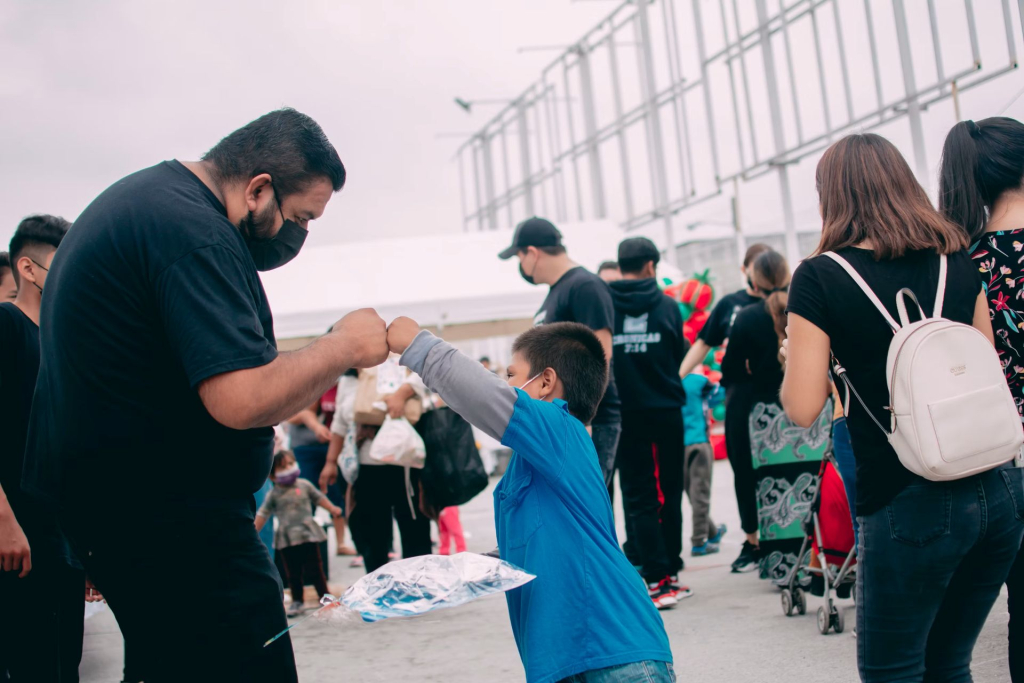
Concrete experiences help children grasp abstract concepts like charity far more effectively than explanations alone. Real acts of giving, like baking cookies for a nearby shelter, sorting donated clothes, or volunteering at a community pantry give children something tangible to hold onto. Making charitable activities hands-on and, when appropriate, enjoyable helps children associate the importance of giving with warmth rather than obligation.
A weekend spent helping at a soup kitchen, for instance, teaches compassion and teamwork more effectively than a conversation ever could. Children see the direct link between their effort and someone else’s relief, which makes the lesson stick.
Children learn by watching the adults they trust
Long before children are old enough to volunteer on their own, they are watching. Children learn philanthropy by observing their parents’ actions, and modeling charitable acts teaches children how to act far more effectively than instruction alone. A child who regularly sees a parent volunteering, donating, or checking in on an elderly neighbor absorbs the behavior as normal, even expected.
Engaging in volunteer work as a family strengthens these bonds further. Whether it is a weekend clean-up drive, a Simbang Gabi donation run, or a family visit to drop off supplies at a local shelter, shared participation shows children that generosity is a value the whole household holds, not a task assigned only to them.
The Giving Jar: a simple habit with lasting impact
One of the easiest ways to teach children about charitable giving is by creating a “Giving Jar” at home. Coins from allowance, extra birthday money, or spare change collected throughout the week go into the jar, and the family decides together, at the end of a set period, which local charity or cause will receive it. This habit encourages regular charitable contributions instead of one-off gestures tied only to special occasions or the holiday season.
The Giving Jar also gives children a visible, physical marker of their progress. Watching the jar fill up over weeks makes the eventual donation feel earned and meaningful, reinforcing that consistency matters as much as the size of the gift itself.
The emotional and social benefits children gain
The benefits of early exposure to charitable activities extend well beyond the act of giving itself. Children who volunteer report higher self-esteem and optimism, and research on philanthropic activities among young people points to measurable gains in well-being. Studies have found that children engaged in community service are 34% healthier, and philanthropy has been linked to a 35% reduction in behavioral problems among children who participate regularly.
Beyond the numbers, charitable engagement fosters emotional intelligence. Discussing real situations, such as a classmate whose family lost their home, a sick child needing life support, or families affected by life-threatening diseases helps children understand how others feel, which is central to developing empathy. Children engaged in charitable activities consistently show higher empathy levels, and there is evidence that children who give back are less likely to bully others, likely because they have practiced recognizing and responding to another person’s needs.
Group-based charitable activities, such as hands-on drives and fundraisers, also teach planning and teamwork, while exposing children to peers, teachers, and friends working toward a shared goal. These experiences build social connections that reinforce the value of participation itself, not just the outcome.
Making generosity part of everyday family life
Teaching children about charity works best when it is practical and woven into everyday routines rather than treated as an occasional school project or special-occasion activity. This might mean setting aside a portion of monetary donations each month as a family, checking in on the same local charity over the course of a year, or making a habit of asking, “Is there anything we should give away?” during a closet clean-out.
Framing charity as a family value, rather than an isolated task, helps children internalize the concept. Over time, this consistent example teaches children to appreciate what they have. Children engaged in giving develop gratitude and stronger appreciation for their own circumstances, and repeated charitable actions have been shown to reduce materialism in children, replacing a focus on acquiring things with a focus on contributing to a bigger sense of world community.
Teaching philanthropy in this way also fosters a lifelong commitment to civic engagement. A child who grows up sorting donations, visiting a food bank, or dropping coins into a Giving Jar carries that habit into adolescence and adulthood, often continuing to volunteer, donate, or organize community efforts as students and, later, as working professionals.
Growing up in a home built for giving
Children absorb what they see and practice what they are given room to decide for themselves. A household where charity is explained, modeled, and made tangible through conversations, shared decisions, and simple habits like a Giving Jar gives children a head start on becoming compassionate, socially responsible adults. The lesson is rarely taught in a single moment. Often, it is built through small, repeated acts of giving that a family chooses to make part of daily life.