




Introduction: Cultivating Cognitive Skills Early
Nurturing the minds of young learners is an important skill and a primary concern for modern Filipino parents striving to secure a bright future for their families. In an increasingly interconnected world driven by rapid digital developments, helping kids focus on studying has evolved from a traditional academic task into a core foundation for personal development.
Setting children up for sustainable learning success requires building solid cognitive habits during their most formative stages of life. When parents proactively guide their kids through early-stage academic struggles, they do not just improve temporary report card marks; they instill a foundational capability to process, analyze, and retain information effectively. Untying the initial knot and hurdle by laying down a structured approach to learning allows young minds to look at education not as a series of stressful hurdles, but as an exciting, lifelong journey toward personal excellence.
Understanding Child Focus and the Dynamics of Attention Span
To effectively cultivate a supportive environment for your child, it is necessary to examine how internal developmental stages affect everyday academic performance. A child’s ability to maintain focus is fundamentally shaped by biological growth patterns and environmental factors rather than a simple willingness to listen. Understanding these cognitive mechanics helps parents avoid unnecessary frustration and implement compassionate, highly effective ways to guide early educational development.
Decoding How Young and Older Children Sustain Attention
Research underscores that a standard human attention span changes significantly depending on an individual’s biological development and age. Preschoolers and younger children generally hold a natural concentration capacity spanning only five to twenty minutes, depending entirely on the novelty and interest level of the task at hand. For most children in early childhood, encountering brand-new or difficult concepts will naturally reduce this timeframe to its lower limits.
As students mature into older children, their neurological pathways develop, expanding their ability to sustain attention and manage multiple pieces of information simultaneously. Recognizing these natural biological limits keeps parents from setting unrealistic expectations. Instead of demanding that a young child sit quietly for hours at a time, guardians can align their household study expectations with authentic developmental milestones, ensuring learning sessions stay constructive.
Recognizing Why Many Children Face Trouble Focusing
When a child struggles with home assignments, the root issue is rarely a simple lack of discipline. Many children experience notable trouble focusing because their immediate surroundings overload their developing senses, making it difficult to isolate one task from adjacent stimuli. For a young child, the visual presence of a favorite toy, the distant rumble of traffic, the burden of too much extracurricular activities, or family conversations in high-traffic household zones can trigger a quick biological shift in attention.
Furthermore, when a child concentrates on a highly complex assignment, sudden feelings of intellectual frustration can quickly lead to severe mental exhaustion and subsequent distraction. These cognitive blocks create a psychological barrier, causing the child to actively seek out secondary stimuli to escape discomfort. By understanding that a temporary lack of focus is an indicator of environmental or cognitive overwhelm, parents can adjust their support strategies to address the root causes of everyday learning struggles.
Nurturing Concentration Muscles Through Focus Skills
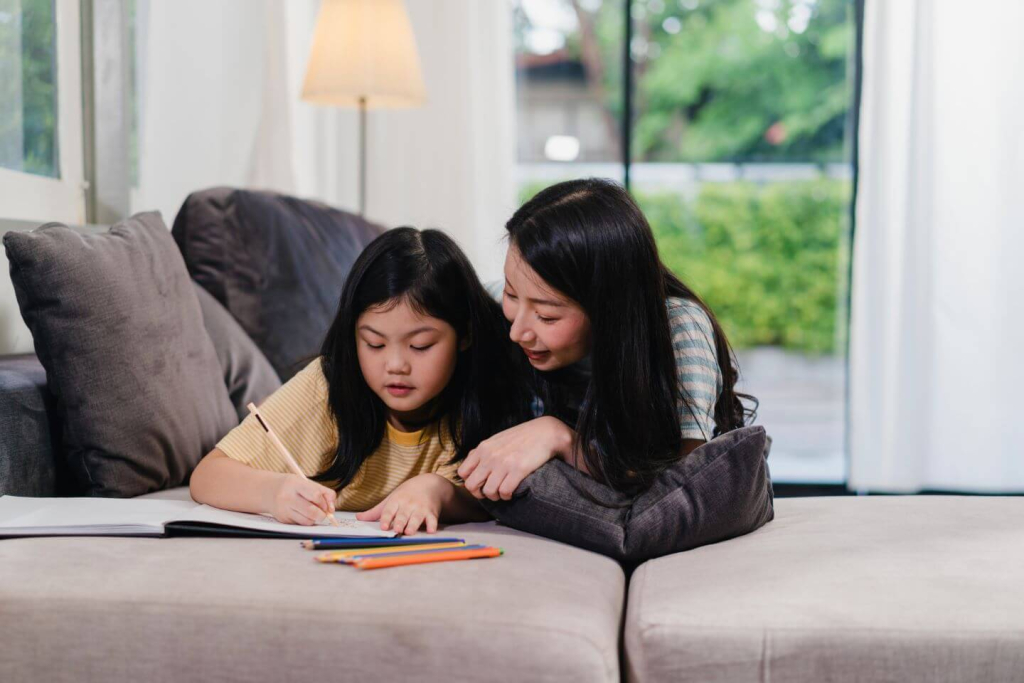
It helps to view child focus not as an unchangeable, pre-determined trait, but as a group of concentration muscles that require regular exercise to strengthen over time. Just like building physical endurance, developing resilient concentration skills requires consistent, daily training coupled with the gradual introduction of more demanding intellectual tasks.
By engaging kids in targeted, fun activities such as jigsaw puzzles, memory card games, or basic mindfulness observations, families can systematically train young minds to filter out competing background noises. As these essential focus skills are practiced daily, students learn to consciously control their intellectual energy. This gradual training empowers them to tackle increasingly complex school assignments with greater confidence and much less mental strain.

Image source: https://www.magnific.com/premium-photo/young-asian-university-woman-doing-homework-home_413363549.htm
Designing a Dedicated Workspace to Improve Focus
The layout of a physical household environment plays a vital role in determining how effectively a student processes schoolwork. Creating a dedicated workspace specifically tailored to a child’s ergonomic and psychological needs can instantly minimize learning friction. This organized zone acts as a visual signal that tells the mind it is time to transition from playtime to focused intellectual engagement.
Crafting An Organized Hub Free From Distractions
An optimal home study environment must be strategically isolated from high-traffic household areas to prevent sudden audio and visual interruptions. Organizing the desk space with designated storage containers keeps learning materials like pencils, rulers, and paper easily accessible, effectively eliminating the need for a child to break focus just to search for a missing tool.
Physical comfort is equally essential for sustaining focus over extended periods. Utilizing ergonomic furniture adjusted to a child’s height promotes excellent physical posture and prevents muscle strain, while keeping the room temperature at a comfortable 20°C to 22°C effectively wards off drowsiness. Additionally, a bright lighting setup that blends natural window light with targeted desk illumination reduces eye strain, keeping the mind sharp, alert, and entirely free from uncomfortable physical sensations of fatigue.
Setting A Supportive Environment For Challenging Tasks
When a student sits down to tackle an intimidating academic challenge, such as a long division problem, the sheer visual complexity of the work can feel completely overwhelming. In a disorganized or loud room, this initial sense of frustration often intensifies, leading to a total breakdown in focus. A quiet, clean, and distraction-free study environment provides the mental clarity required to process complex formulas step-by-step.
By systematically removing digital distractions—such as tablets, televisions, and smartphones—from the line of sight, parents help ensure their child’s attention span remains fixed on the assignment. In this calm space, the child can tackle one long division problem with deep focus, working through each calculation without being pulled away by modern digital notifications.
Enhancing Well-Being And Learning Habits In Camella Aurentia
Master-planned residential communities play an increasingly significant role in supporting a child’s holistic development and academic success. In premium neighborhood developments like Camella Aurentia, families enjoy a tranquil, secure, and thoughtfully designed environment that naturally fosters healthy lifestyle routines. The peaceful ambiance of these communities makes it easier to set up a dedicated workspace that remains entirely free from the hectic noises of dense urban traffic.
Living in a neighborhood that values overall well-being provides children with a seamless balance between quiet indoor learning and enriching outdoor experiences. The intentional design of Camella Aurentia encourages a lifestyle where physical activity and focused studying coexist beautifully. This harmonious community structure empowers children to build lifelong learning habits, giving them a distinct advantage as they advance along their personal educational journeys.
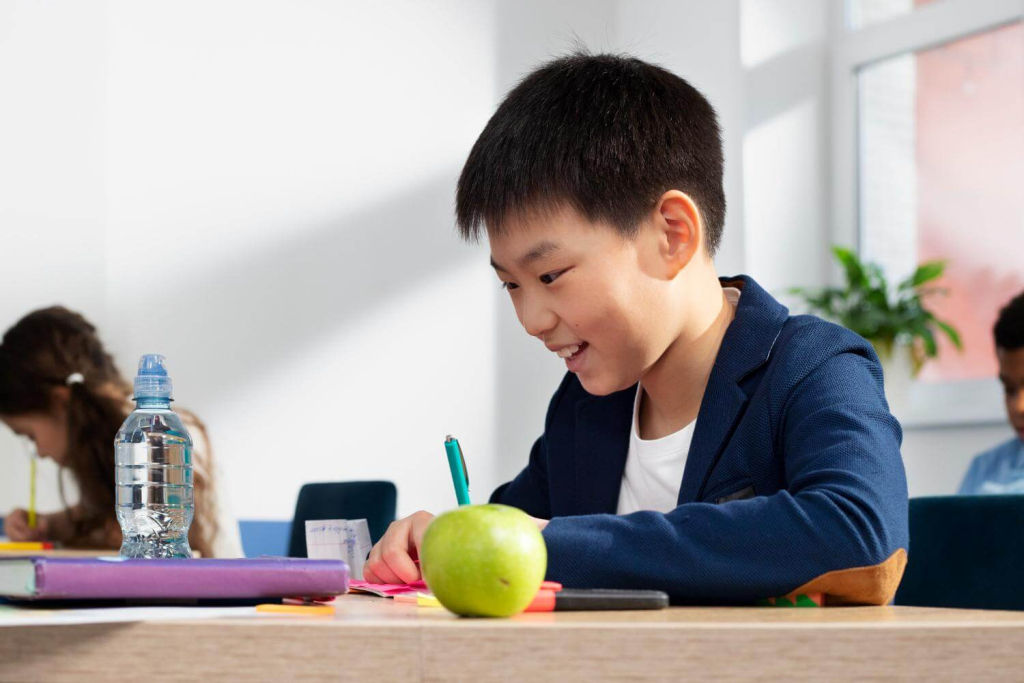
Image source: https://www.magnific.com/free-photo/kids-classroom-taking-english-class_26326240.htm
Establishing a Set Routine to Boost Concentration
Consistency forms the bedrock of successful cognitive development for young learners. When daily schedules are predictable, children utilize less mental energy trying to figure out what comes next, allowing them to channel their cognitive abilities fully into their studies. A well-balanced family routine ensures that a child’s physical and psychological needs are fully met long before they open a textbook.
The Connection Between Adequate Sleep, Diet, and Academic Success
A child’s physical health directly determines their overall academic performance and behavior in the classroom. Numerous research studies indicate that a poor diet and inadequate rest can have a disastrous effect on a student’s cognitive abilities, focus skills, and emotional stability. Making a few mindful, healthy swaps in a child’s daily diet—such as substituting sugary snacks and caffeine with nutrient-dense options and consistent hydration—provides steady brain energy and prevents sudden physical crashes.
In addition to nutrition, sleep quality remains an absolute pillar for cognitive function. Establishing a rigid bedtime routine ensures that children receive the recommended nine hours of uninterrupted sleep every single night, allowing the brain to consolidate memories and restore vital mental energy. This baseline of physical health directly boosts concentration, giving students the stamina required to pursue academic excellence day after day.
Why A Child Struggles Without Consistent Daily Schedules
Without a clear, predictable daily schedule, a child struggles to manage their internal energy, frequently fluctuating between periods of hyper-activity and extreme exhaustion. The absence of a set routine forces children to constantly negotiate with parents regarding when to do homework, when to play, and when to rest, which creates unnecessary friction and anxiety.
Implementing a highly visible, consistent daily calendar helps eliminate this underlying stress. When study block times are clearly defined and honored every day, children develop an instinctual clock for learning. This behavioral predictability reduces resistance toward academic tasks, making it much easier for students to transition into a focused frame of mind when study time arrives.
Balancing Homework, Play, and Essential Social Skills
A truly effective daily routine must look beyond schoolbooks to prioritize a child’s total personal development. Restricting a student’s schedule entirely to homework and test preparation can quickly lead to burnout, which severely damages their ability to focus effectively over the long term.
A healthy lifestyle should deliberately reserve ample time for rich social interaction and cooperative play with peers. Engaging in outdoor group activities helps children build vital social skills, manage emotions, and learn teamwork. By creating a schedule that values both individual academic focus and active community play, parents protect their child’s psychological well-being, keeping them motivated and eager to learn.
Incorporating Frequent Breaks to Help Your Child Stay Focused
Expecting a young mind to study continuously without a pause is an inefficient approach to education that directly causes cognitive fatigue. Introducing structured intervals of rest is one of the most effective ways to refresh a child’s attention span. By treating rest as a strategic tool rather than an afterthought, parents can significantly maximize the efficiency of every single study session.

Breaking Down Large Tasks Into Manageable Steps
To a young learner, massive school assignments can look like an intimidating, impossible knot that leaves them completely unsure of how to begin. This initial sense of helplessness often causes children to quickly look for distractions to avoid the task. Parents can counter this by teaching their children to break down large tasks into smaller, bite-sized steps.
For example, instead of asking a child to complete an entire chapter worksheet all at once, parents can guide them to focus on just three questions at a time. Using visual timers can be incredibly helpful here, as they provide a clear representation of time and make tasks feel much less intimidating. Completing each small step provides a rewarding sense of accomplishment, building the momentum needed to progress through the remaining work with ease.
The Power Of A Play Break And Short Breaks For Most Children
Integrating short breaks directly into study blocks acts as a vital reset button for a student’s cognitive abilities. Continuous mental effort without relief quickly leads to an accumulation of stress, which severely limits an individual’s ability to retain fresh information.
During these scheduled intervals, encouraging a physical play break away from the desk is highly beneficial. Getting up to stretch or taking deep breaths helps increase blood circulation to the brain, which naturally restores cognitive function. These brief moments of physical movement reduce physical tension and clear mental fog, ensuring that when the student returns to their dedicated workspace, their mind is fully recharged and ready to focus.
Utilizing Fun Activities As Active Study Tools
Not all educational activities need to follow a traditional textbook format to deliver real academic value. Introducing strategic, fun activities into a child’s weekly routine can serve as highly effective study tools that covertly sharpen essential cognitive abilities.
Crossword puzzles are excellent for expanding vocabulary, improving spelling retention, and building contextual reasoning skills. Observation games can sharpen visual focus, train attention to detail, and improve working memory. Similarly, strategy board games help develop logic, long-term planning abilities, and critical problem-solving skills.
Using these engaging methods transforms cognitive development into an enjoyable family experience. Because these activities feel like play, children gladly participate, reinforcing their natural focus skills and creating entertaining memories without experiencing the pressure often associated with traditional school homework.
Effective Ways to Help Your Child Focus Effectively
As children grow older and face more complicated school subjects, they need to transition from passive learning to proactive self-regulation. Teaching children how to manage their own attention empowers them to take full ownership of their personal educational journey, minimizing the need for constant parental intervention.

Image source: https://www.magnific.com/premium-photo/young-woman-using-mobile-phone_108259178.htm
Mastering One Task At a Time Rather Than Multitasking
In a modern world filled with digital media, many children mistakenly believe they can successfully manage multiple things at once, such as listening to music, texting a classmate, and writing an essay simultaneously. However, cognitive research consistently proves that multitasking splits attention, leads to superficial processing, and significantly increases errors.
Parents must actively encourage children to focus on one task at a time, protecting that single objective until it is fully completed. When a student learns to direct their full intellectual energy onto a single assignment, they process concepts more deeply and finish their work much faster. This disciplined, singular focus builds a foundation for true professional and academic success later in life.
Integrating Self-Monitoring Software And Parental Monitoring Programs
Technology can be a major source of distraction, but when utilized correctly, it can also serve as a powerful tool for academic development. For older children who rely on laptops or tablets for research, installing self-monitoring software can help them track their own digital productivity and see exactly where their time goes.
To complement this, parents can implement gentle parental monitoring programs to block distracting social media platforms and entertainment websites during designated homework hours. This digital balance protects children from constant notifications, allowing them to utilize online resources safely and productively within a secure digital space.
Creating Lasting Life Habits For An Enduring Academic Journey
The ultimate goal of helping kids focus on studying is to help them transform these guided practices into independent, lifelong habits. Every time a parent helps a child organize a desk, break down an assignment, or manage an online distraction, they are providing them with invaluable self-regulation tools.
These structured routines gradually build deep self-confidence within a student. As children experience the tangible rewards of their focused efforts, they begin to naturally apply these strategies to all areas of life. This internal growth ensures that as they advance through higher education and enter adulthood, they carry a resilient, self-reliant mindset capable of achieving long-term success.
Conclusion: Empowering the Next Generation for Peak Academic Performance
Helping young learners cultivate strong focus skills is a comprehensive process that requires patience, structure, and a deeply supportive home environment. By understanding natural attention spans, designing optimized workspaces, and enforcing consistent daily routines, families can effectively remove the friction that so often hinders academic progress. These intentional interventions ensure that children can face complex intellectual challenges without feeling overwhelmed or burned out.
As these strategic efforts transform into permanent lifestyle habits, students grow into highly independent, confident thinkers who are fully prepared for the future. Providing children with the physical, environmental, and emotional tools they need to concentrate is one of the most profound investments a family can make. Guided by these healthy practices, young minds will confidently navigate their academic journeys, translating early potential into a lifetime of peak personal performance and meaningful success.