



Introduction: Traditional Filipino Desserts and a Sweet Taste of Heritage
The Philippines has a rich selection of traditional Filipino desserts shaped by local harvests, regional customs, and generations of home cooking. From coconut-rich rice cakes to chilled fruit creations, Filipino desserts showcase indigenous ingredients such as glutinous rice, coconut milk, purple yam, and tropical fruit. Malay, Chinese, and Spanish influences have also shaped Filipino cuisine, creating sweets with varied textures and flavors. Across different regions, people share these delicacies at fiestas, family reunions, and everyday gatherings.
Exploring the best traditional Filipino desserts offers a delicious glimpse into the country’s food traditions and hospitality. Many recipes rely on local ingredients, while others reflect generations of adaptation. Here are 14 popular Filipino desserts, from steamed rice cakes to creamy custards and refreshing shaved ice.
1. Bibingka: A Christmas Season Favorite
Bibingka is a traditional dessert closely associated with the Christmas season and Simbang Gabi. Made with rice flour, coconut milk, eggs, and sugar, this soft rice cake is traditionally baked in a clay oven lined with banana leaves. Butter, salted egg, and cheese provide a savory contrast to its mild sweetness. Outside the holiday season, bibingka may also be available at local Filipino grocery stores, depending on location and stock.
2. Puto: Soft Steamed Filipino Rice Cakes
Puto is a familiar Filipino snack made with rice flour, sugar, and sometimes milk. These fluffy rice cakes may feature cheese or salted egg, while recipes vary in texture and preparation across the Philippines. Commonly sold at bakeries, markets, and food stalls, puto is often enjoyed alone or alongside savory dishes. For Filipinos living abroad and those exploring Filipino cuisine, traditional rice cakes like puto can also be found through Filipino specialty supermarkets and bakeries. In California, Seafood City and Valerio’s Bakeshop are examples of businesses serving Filipino communities with familiar food products and baked goods, helping introduce these flavors to people beyond the Philippines.
3. Kutsinta: A Chewy, Caramel-Colored Rice Delicacy
Kutsinta differs from puto through its chewy, slightly sticky texture and amber-brown color. Recipes use tapioca flour or rice flour, sugar, and lye water to achieve the characteristic consistency. Grated coconut adds freshness to the sweet cake. Often sold alongside puto, kutsinta demonstrates how familiar ingredients can produce distinct Filipino sweets.
4. Puto Bumbong: A Purple Christmas Delicacy
Puto bumbong is a festive rice delicacy associated with Simbang Gabi. Traditionally prepared from glutinous rice steamed in bamboo tubes, it is served with butter or margarine, brown sugar, and shredded coconut. Its distinctive purple hue and fragrant toppings make it a recognizable part of Christmas food traditions. Buying puto bumbong after church remains a familiar seasonal ritual for many families.
mage source: https://themayakitchen.com/sapin-sapin/
5. Sapin-Sapin: A Colorful Layered Filipino Dessert
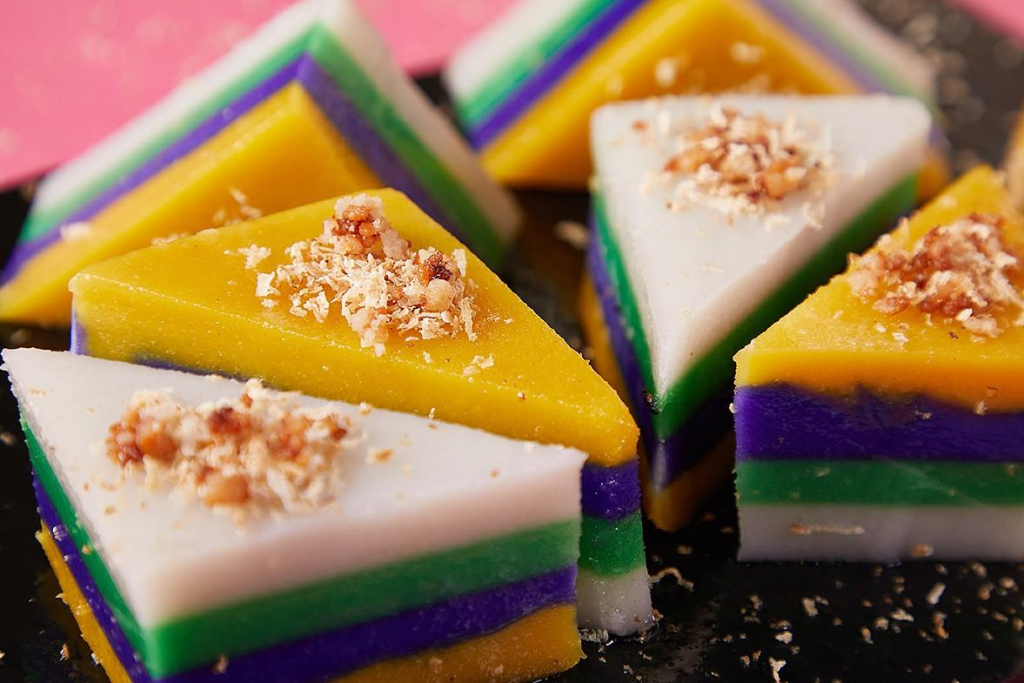
Sapin-sapin is a sticky rice cake known for its colorful layers. Its batter combines glutinous rice flour, coconut milk, sugar, and flavorings such as purple yam and pandan. Some commercial versions use artificial coloring to produce brighter shades. Often cut into small portions for sharing, sapin-sapin is a type of kakanin, a category of traditional Filipino treats commonly made with rice and coconut. Like other kakanin, it is frequently served at fiestas, family gatherings, and other special occasions.
6. Biko: A Filipino Rice Cake With Latik
Biko is a dense rice cake cooked with glutinous rice, coconut milk, and brown sugar. Slow cooking creates a thick, sticky texture and rich caramel notes. It is commonly topped with latik, which may refer to crispy coconut curds or a reduced coconut sauce, depending on the regional preparation. A caramelized coconut sauce can provide extra sweetness when that variation is used.
Biko is often prepared in large portions for birthdays, reunions, and celebrations. In Pampanga, food traditions remain closely connected to family gatherings, making shared delicacies a natural part of community life around places such as Camella Pampanga.
7. Suman: Glutinous Rice Wrapped in Banana Leaves
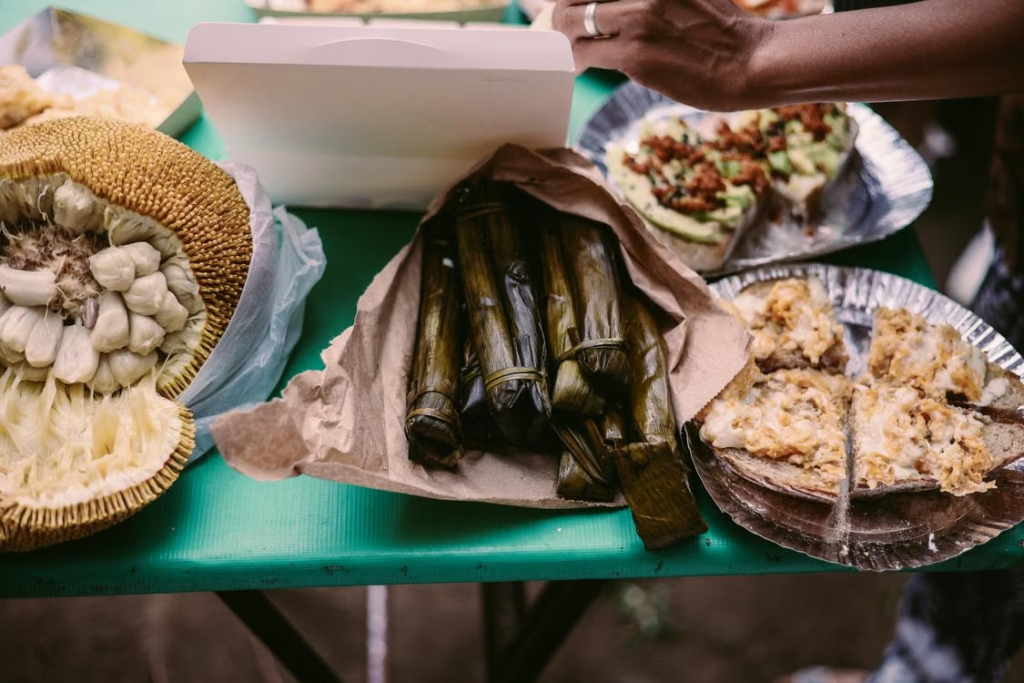
Suman is made by cooking glutinous rice with coconut milk, wrapping it in banana leaves, and steaming it. The leaves help hold the rice together and contribute a subtle aroma. Depending on the region, suman is served with brown sugar, ripe mango, or sweet syrup made with coconut or palm sugar. Its simple preparation and portability make it a familiar snack for market visits, travel, and family gatherings.
8. Cassava Cake: A Coconut-Rich Filipino Delicacy
Cassava cake is a popular baked dessert made with grated cassava, coconut milk, condensed milk, sugar, eggs, and butter. Its moist, slightly chewy texture is often complemented by a creamy topping. Some recipes include cheese for a savory contrast. Unlike rice-based kakanin, cassava cake relies on a root crop widely used in Filipino cooking. It is commonly prepared in generous trays for fiestas, birthdays, and family celebrations.
9. Pastillas de Leche: A Delicate Milk Sweet
Pastillas de leche are small milk candies associated with traditional delicacy-making in San Miguel, Bulacan. Carabao milk is traditionally cooked with sugar until the mixture thickens into a soft confection, although modern recipes may use milk powder or other milk varieties. The candies are coated with sugar or wrapped individually. Their tender texture and gentle sweetness make them popular pasalubong, reflecting the Filipino custom of bringing food home for loved ones.
10. Leche Flan: A Rich Filipino Custard
Leche flan is a popular Filipino dessert made with eggs, milk, and sugar. Its smooth, dense custard is topped with caramel, which balances the sweetness with a slightly bittersweet flavor. Many recipes use condensed milk and evaporated milk for a richer consistency. Served chilled at birthdays, fiestas, and Christmas celebrations, leche flan remains a familiar centerpiece of Filipino food gatherings.
For Filipinos living overseas, ready-made leche flan can offer a taste of familiar celebrations far from home. Filipino-oriented supermarkets and bakeries in the United States, including Seafood City and Goldilocks, may carry the dessert, depending on the branch and current stock.
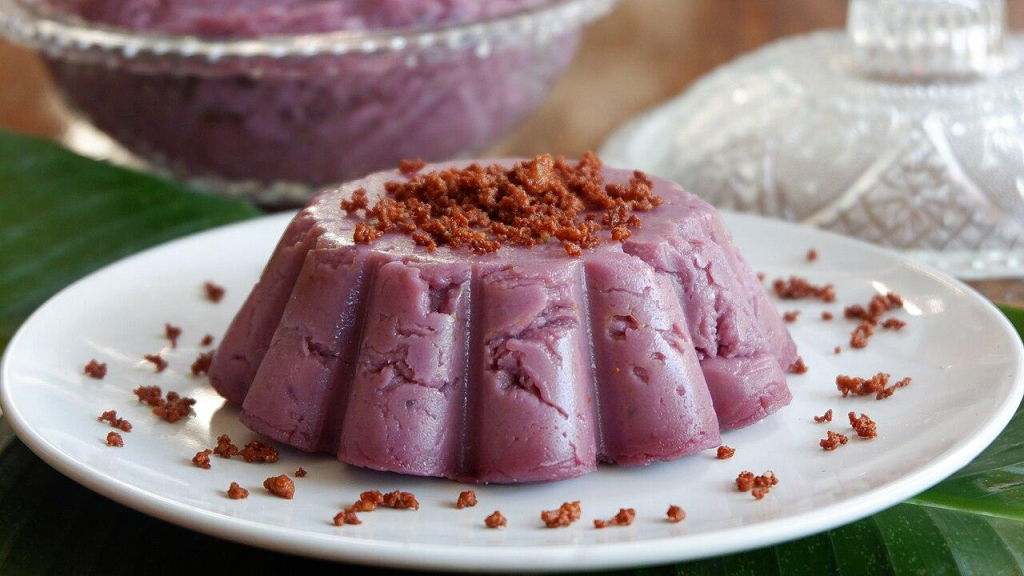
Image Source: Lokalpedia | Commons Wiki
11. Ube Halaya: A Sweet Purple Yam Jam
Ube halaya is a famous Filipino dessert made from purple yam, milk, sugar, and often butter. The cooked yam is mashed and stirred with the other ingredients until thick and creamy. Also known as purple yam jam, it can be eaten on its own or used as a filling for breads, pastries, and other desserts. Its earthy sweetness and distinctive color have made ube a familiar ingredient in Filipino bakeries and holiday food spreads.
For Filipinos abroad, access to familiar ingredients and ready-made delicacies can make traditional flavors easier to enjoy far from home. Seafood City, an American supermarket chain specializing in Filipino food and products, may carry packaged ube halaya in its refrigerated section, depending on the branch and availability.
12. Buko Pandan: A Creamy Coconut Dessert
Buko pandan combines young coconut, pandan-flavored jelly, cream, and condensed milk in a chilled dessert suited to the Philippine climate. Coconut provides a tender texture, while pandan contributes its distinctive fragrance. Some recipes include nata de coco or extra shredded coconut. Served in cups or a large bowl, buko pandan is a popular choice for potlucks, fiestas, and family meals.
13. Halo Halo With Ube Ice Cream: A Colorful Shaved Ice Treat
Halo halo is often considered the unofficial national dessert of the Philippines. This refreshing shaved ice treat combines sweetened beans, jellies, fruit, sweet potato, milk, and toppings such as leche flan. Ube ice cream adds a creamy texture and earthy sweetness, while purple yam jam provides another layer of flavor. Some modern versions include nuts or chocolate.
The name refers to mixing the ingredients before eating, allowing their different textures and flavors to combine. This Filipino version of a mixed shaved-ice dessert celebrates the variety of local ingredients, making halo-halo one of the best Filipino desserts for a hot afternoon.
14. Banana Lumpia (Turon): A Crispy Banana Dessert
Turon, also called banana lumpia, is a popular Filipino merienda made by wrapping slices of sweet plantain and jackfruit in spring roll wrappers. The rolls are deep-fried until crisp, while brown sugar caramelizes into a thin, sweet coating. The contrast between the crunchy exterior and tender fruit makes turon a satisfying snack. Often sold by street vendors, neighborhood eateries, and local restaurants, it remains an affordable choice for anyone craving something warm and sweet.
Conclusion: Celebrating the Many Flavors of Philippine Desserts
The variety of Philippine desserts reflects the country’s agricultural heritage, regional identities, and tradition of sharing food. From rice cakes, guinataang bilo bilo with rice balls, and coconut-rich delicacies to milk candies, ube sweets, and shaved ice, these recipes demonstrate how local ingredients create distinctive flavors. Many are prepared for celebrations, while others remain everyday snacks like the street favorite taho that uses silken tofu. Exploring these traditional recipes offers a way to appreciate the communities and generations that preserve them. We hope this guide inspires you to discover more Filipino delicacies and enjoy the food traditions that make the Philippines distinctive.