





Image source: Magnific
Introduction
Decluttering a residential property is one of the most rewarding home improvement projects a homeowner can undertake. Over time, closets, storage rooms, and living areas naturally accumulate an excess of unused possessions, turning valuable square footage into crowded storage space. Hosting a weekend yard sale offers a practical, highly effective opportunity to transform this accumulated domestic inventory into extra cash while reclaiming peace and order within your living environment.
Beyond the financial return, a well-managed driveway event fosters positive community engagement, allowing neighbors to connect while finding valuable pre-loved items. Transitioning from a house full of excess goods to an organized venue requires strategic execution, careful merchandising, and structured pricing. Whether it’s your first yard sale or you’re hosting your own yard sale again, this is a practical way to sell stuff, earn extra money, and help most people in your community find useful bargains. By following a clear operational roadmap, any homeowner can navigate the logistics of planning, marketing, and hosting an event that turns unwanted clutter into immediate financial gains.
Tip #1: Learn How to Organize a Garage Sale Inventory by Decluttering Every Room
Curation is the cornerstone of any successful sale. Before setting up display areas, homeowners must systematically audit every room in their house, separating sentimental treasures from items that can be liquidated to get rid of unnecessary household clutter. Beginning this sorting process several weeks in advance provides ample time to clean, inspect, and group items logically, ensuring that every piece presented to buyers is attractive and ready for immediate use.
Categorizing Pre-Loved Apparel, Kids Clothes, and Baby Clothes
Clothing represents one of the largest categories at any residential clearance event. Kids clothes and baby clothes are consistently among the highest-performing best sellers because growing families are constantly searching for gentle wear at low prices. Sort through closets to isolate pre-loved garments, verifying that all clothing items are freshly laundered, free of stains, and neatly organized by size and age group.
Kids’ clothes are often the best sellers at garage sales, so make them easy to browse and display alongside baby clothes. If you have more items, such as shoes, toys, or other things for children, grouping them is a simple idea that encourages families to spend more time browsing.
Filtering Furniture, Everyday Appliances, and Unique Items
Larger household assets frequently generate the most traffic and move fastest off the driveway. Essential home appliances, especially functional items like vacuums and kitchen electronics, sell quickly when presented in clean, working condition. Heavy furniture pieces, such as dining sets, coffee tables, and storage cabinets, draw serious shoppers looking for a good deal. Additionally, curating unique items, vintage collectibles, and rare decor pieces serves as an excellent hook to grab attention and entice curious customers to browse longer.
Separating Functional Toys, Collectibles, and General Goods
Clear out outgrown toys, board games, box sets, and miscellaneous house goods that have been sitting unused in storage bins or the garage. When deciding how much stuff to present, focus strictly on quality and functionality. Complete sets with all their original parts command higher prices, whereas broken items or pure junk should be set aside for disposal or recycling rather than put on sale.
Tip #2: Schedule Event Timing to Host a Multi-Family Neighborhood Yard Sale
Strategic planning and timing dictate the overall turnout of your garage sale. Aligning your event dates with broader community habits, regional weather patterns, and local regulations ensures a steady stream of shoppers throughout the day.
Selecting Optimal Weekend Operating Hours
Choosing the right day and time directly impacts buyer volume. Scheduling your event on weekends, specifically during peak morning hours on Friday and Saturday starting at 8 or 9 AM, captures maximum foot traffic. Saturdays are historically the busiest days for bargain hunting. Setting up early allows you to capture enthusiastic early birds and weekend errand-runners before afternoon temperatures rise.
Verifying Municipal Regulations and HOA Guidelines
Before advertising, verify local municipal regulations to determine whether formal permit fees or commercial licenses are required for private driveway events. Furthermore, home owners residing in master-planned communities, such as the tranquil, family-oriented neighborhoods of Camella Davao, should check subdivision homeowners’ association (HOA) rules regarding visitor parking, signage placement, and street access. Establishing clear parking zones prevents traffic bottlenecks and maintains goodwill among nearby neighbors.
Collaborating with Neighbors for Shared Turnout
Expanding a single-home event into a coordinated, multi-family neighborhood yard sale exponentially increases overall reach. Clustered sales create a destination event that draws shoppers from surrounding districts. In fact, hosting an annual neighborhood sale can increase foot traffic by up to 50% compared to standalone efforts. Collaborating with neighbors to coordinate a block-wide effort pools marketing resources, creates a lively community atmosphere, and leads to higher overall sales for every participant involved.
Tip #3: Practical Garage Sale Tips for Displaying Clothing and Household Goods
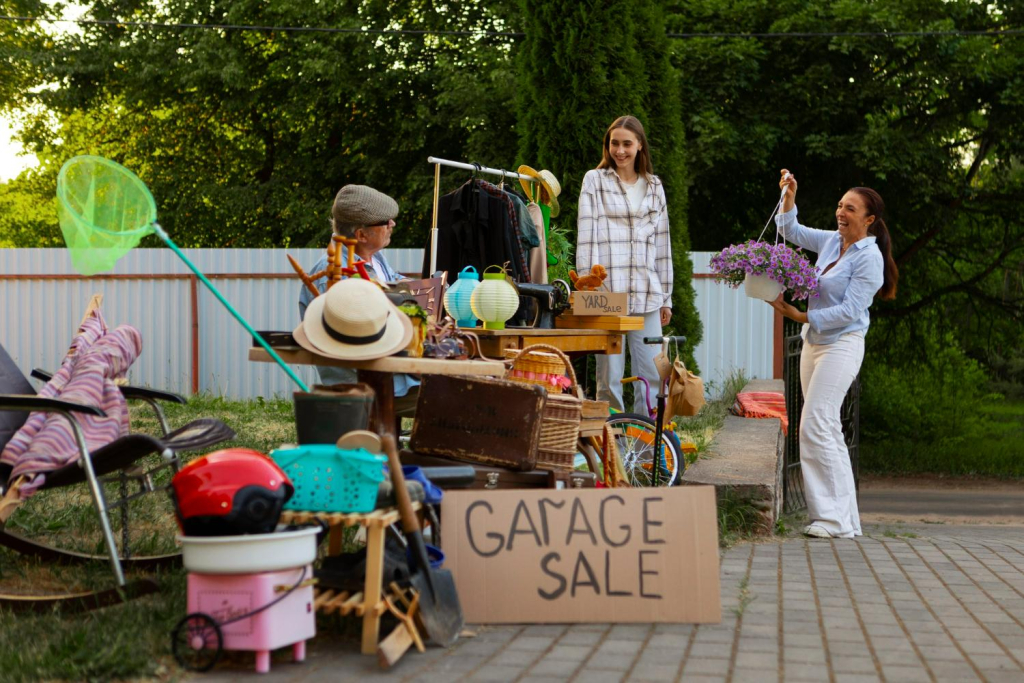
Transforming your driveway or garage into a neat, welcoming retail area encourages shoppers to spend more time browsing. Applying basic merchandising principles makes your items look appealing, well-cared-for, and worth buying.
Setting Up Sturdy Tables and Categorized Display Zones
Avoid placing goods directly on the grass or bare concrete floor, as items left on the ground appear cheap or neglected. Use sturdy tables, portable folding counters, and raised platforms to keep items neat, elevated, and easy to reach. Group similar items into distinct categories, such as kitchenware, tools, books, and home electronics, so shoppers can navigate your setup effortlessly.
Utilizing Apparel Racks and Hanging Signs for Maximum Visibility
Presenting clothing on dedicated hanging racks with hangers dramatically increases buyer interest and total sales volume. Hanging clothes allows customers to view sizes and patterns instantly without sorting through messy piles. Complement your layout with visible hanging signs and bright color section banners to direct foot traffic smoothly between different product stations.
Creating Functional Testing Stations for Home Equipment
Set up an accessible outdoor testing table equipped with an extension cord, power strip, and batteries. Encouraging buyers to test vacuums, lamps, and small kitchen appliances on the spot builds buyer confidence and eliminates hesitation, ensuring quick transactions for electronic goods.

Image source: https://www.magnific.com/premium-photo/bright-colored-clothes-wooden-hangers-market-clothes-shop-outdoor-market_107476755.htm
Tip #4: Label Household Goods with Clear Price Tags and Simple Prices
Ambiguity around pricing creates friction and causes potential buyers to walk away without making a purchase. Establishing a transparent pricing scheme ensures seamless checkout workflows and maximizes overall cash return.
Pricing Goods at 10% to 30% of Original Retail Value
As a general rule, items priced at 10% to 30% of their original retail value sell at the most efficient rate. Before setting valuations, check local thrift stores or online resale listings to gauge fair market expectations. Keep prices simple and rounded. Eliminate the hassle of dealing with loose change during busy buying rushes.
Labeling Every Item with Visible Price Stickers
Tag every item with a clear price before the sale begins to prevent constant pricing questions. Using removable price stickers or bright color price tags ensures instant visibility while preserving the condition of delicate surfaces.
Packaging Multi-Item Bundles and Leaving Margin for Negotiation
For smaller, low-cost goods like paperbacks, toys, or kitchen utensils, group a whole bunch of items into a clear box or bundle sold for a single flat rate. Always build a modest 10% to 20% negotiation margin into your asking prices, as bargain hunters love the satisfaction of negotiating a lower rate.

Tip #5: Promote Your Garage Sale Online and Install Directional Street Signs
Even the most meticulously organized sale will fail without active marketing. Combining modern digital advertising with strategic physical signage guarantees maximum visibility across your neighborhood.
Launching Targeted Social Media Listings and Ads
Begin advertising online several days ahead of your event. Market your garage sale on social media platforms to reach a wider audience beyond your immediate neighborhood. Pair your online posts with good signs around nearby intersections, and include an example photo of featured items if you want to sell faster. These are some of the great tips every homeowner can use to attract more shoppers.
Post detailed announcements on social media platforms, local community Facebook groups, neighborhood forums, and classified sites like Carousell. Include high-quality pictures showcasing key highlighted items, such as pristine furniture pieces, brand-name baby clothes, or rare collectibles, to grab attention and build anticipation.
Deploying Directional Signs Along Busy Intersections
Physical yard sale signs remain the most effective tool for capturing driving and walking traffic on event day. Use sturdy, bright-colored signs featuring bold lettering and clear directional arrows pointing directly to your house. Place these signs at major street corners, main road intersections, and subdivision entrances where they will gather the most traffic.
Publishing Announcements in Community Bulletins
Take advantage of hyper-local promotional channels by posting event notices in community newsletters, HOA bulletin boards, and local club messaging groups. Informing nearby neighbors directly ensures strong local attendance right when your doors open.

Image source: https://www.magnific.com/free-photo/mobile-payments-mobile-scanning-payments-face-face-payments_1286183.htm
Tip #6: Manage Cash Change and Digital Payments for a Successful Garage Sale
Smooth day-of operations create a pleasant shopping environment and prevent lost sales during busy operational windows. Being fully prepared to handle diverse payment methods ensures every transaction is completed quickly.
Preparing Ample Cash Change and Digital QR Options
Before your first shopper arrives, secure a safe cash box stocked up on some change, including a large supply of small bills and coins. In addition to physical cash, consider accepting digital payments, QR code transfers, and mobile e-wallets. Offering digital payment options caters to modern shoppers who rarely carry large amounts of cash, enabling higher total sales volume.
Welcoming Shoppers and Managing Early Arrivals
Greet customers warmly as they enter your driveway or garage. Creating a friendly, comfortable atmosphere makes shoppers feel welcome and opens the door for easy price discussions. Be prepared for eager early birds who arrive up to an hour before your posted start time; having your display areas fully set up early allows you to make easy morning sales without feeling rushed.
Providing Shopping Bags and Convenient Checkout Tables
Set up a central checkout table equipped with pens, tape, spare price stickers, and a calculator. Keep a large supply of cardboard boxes and plastic shopping bags on hand so customers can comfortably carry away tons of bought items.
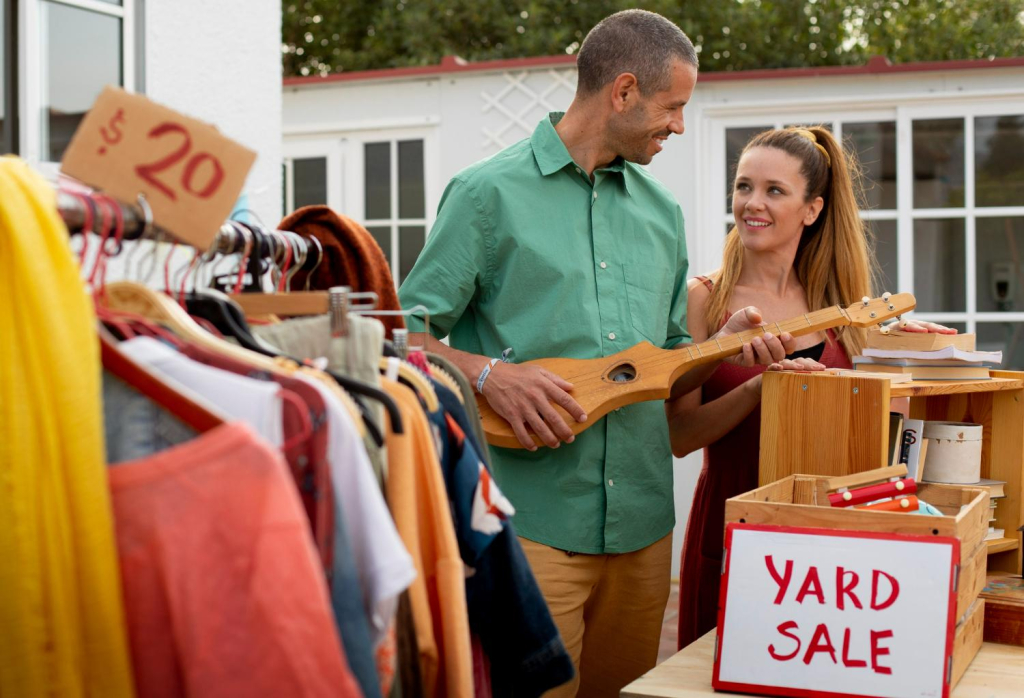
Image source: https://www.magnific.com/free-photo/front-view-man-woman-garage-sale_49104302.htm
Tip #7: Offer Final Discount Deals, Set Out Free Items, and Donate Leftovers
Having a clear post-sale execution strategy ensures you achieve your ultimate goal: completely freeing your home from clutter. Deciding in advance how to clear remaining items prevents unsold goods from ending up back inside your closets.
Executing Afternoon Price Drops and Half-Off Clearance Deals
As your sale enters its final hours or last day, implement aggressive clearance markdowns. Slashing remaining items by 50% during the late afternoon motivates shoppers to clear out remaining goods. Offering extra discounts on bulky furniture pieces saves you the physical effort of hauling heavy items back into your house.
Designating Free Items and Supporting Local Goodwill Centers
Set up a designated “Free” box near the sidewalk for low-value, leftover items. Offering free items generates goodwill among neighbors and ensures remaining small items find a useful home. Once the event closes, pack up all remaining clothes, books, and household goods into boxes and take them to a local Goodwill center, thrift store, or charitable organization. Donating unsold items provides a tax-deductible community benefit while guaranteeing a completely clean, organized garage.
Conclusion
Hosting a home sale is a super easy, highly effective strategy for converting accumulated household clutter into meaningful extra cash. By taking the time to organize your inventory, schedule ideal weekend hours, apply visible price tags, and advertise across local channels, you set the stage for a profitable and enjoyable community event. Beyond the immediate cash earnings, successfully liquidating unused possessions creates an organized, spacious domestic environment that enhances daily living. With a solid plan in place and a welcoming attitude, hosting your next yard sale will be a smooth, rewarding process. Happy selling!