



Learning how to ride a bicycle is one of the most memorable milestones in childhood. Beyond being a fun activity, cycling helps children develop balance, coordination, confidence, and independence.
For many families, teaching kids how to ride a bike safely becomes a cherished bonding experience filled with encouragement, laughter, and personal achievements.
However, bike learning comes with certain risks if proper safety measures are not followed.
Parents and guardians play a crucial role in ensuring that children learn the correct techniques while understanding important safety rules. With patience, preparation, and the right environment, teaching kids how to ride a bike safely can be both enjoyable and rewarding.
Why Learning to Ride a Bike Matters
Riding a bike offers numerous physical and mental benefits for children. It encourages outdoor play, promotes an active lifestyle, hang out with other kids, and helps reduce screen time.
Cycling also strengthens muscles, improves cardiovascular health, and enhances balance and coordination.
Beyond physical benefits, children gain valuable life skills through cycling and learning to ride a bike. They learn perseverance, problem-solving, and self-confidence as they overcome challenges and gradually master riding on two wheels.
What to Prepare for Teaching Children to Bike
With all the benefits that come when kids learn how to ride a bike, many parents prioritize teaching kids how to ride a bike safely at an early age.
Before having your child sit on a bike and teaching them the power pedal position, it’s key that you prepare sufficiently before they even start pedaling.
Choosing the Right Bike for Young Riders
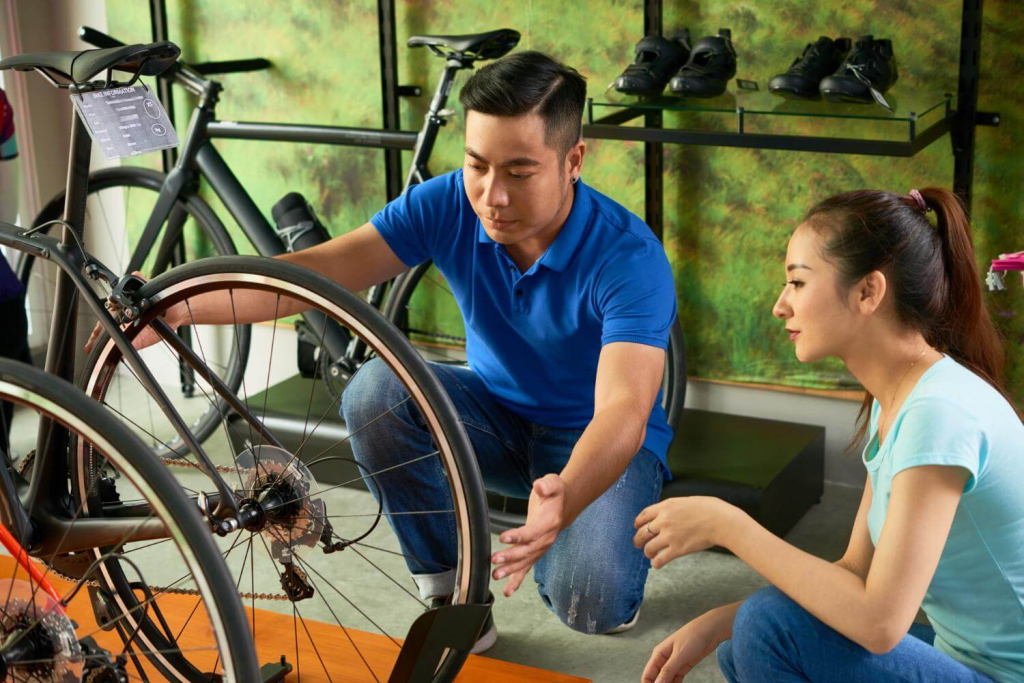
One of the first steps in teaching kids how to ride a bike safely is selecting the appropriate bicycle, especially if it’s their first time on a bike.
A bike that is too large or too small can make learning to ride difficult and increase the risk of accidents, at whatever age your kids may be.
When choosing a new bike, ensure that your child can comfortably sit on the seat and place both feet flat on the ground with their legs straight; this helps with the balance aspect. The handlebars should be easy to reach, and the hand brakes should be simple to operate.
Avoid buying an oversized bike with the intention of your child growing into it. A properly fitted bicycle allows children to learn more confidently and safely, avoiding serious injury.
Always Wear Proper Safety Gear
Safety gear is essential when teaching kids how to ride a bike safely. Before every ride, make sure your child is equipped with the following:
Helmet
A properly fitted helmet is the most important piece of cycling safety equipment. It helps protect against head injuries during falls or collisions. No child should ever begin learning to ride a bike without a good helmet.
The helmet should sit level on the head, cover the forehead, and fit snugly without being uncomfortable.
Knee and Elbow Pads
While not always required, knee and elbow pads provide extra protection for beginners who are likely to experience occasional falls. For most people learning to ride, pads give them a confidence boost as they practice riding.
Closed-Toe Shoes
Children should wear sturdy, closed-toe shoes with good grip. Avoid sandals, slippers, or shoes with loose laces that could get caught in the bike.
Creating a habit of wearing protective gear teaches children that safety should always come first.
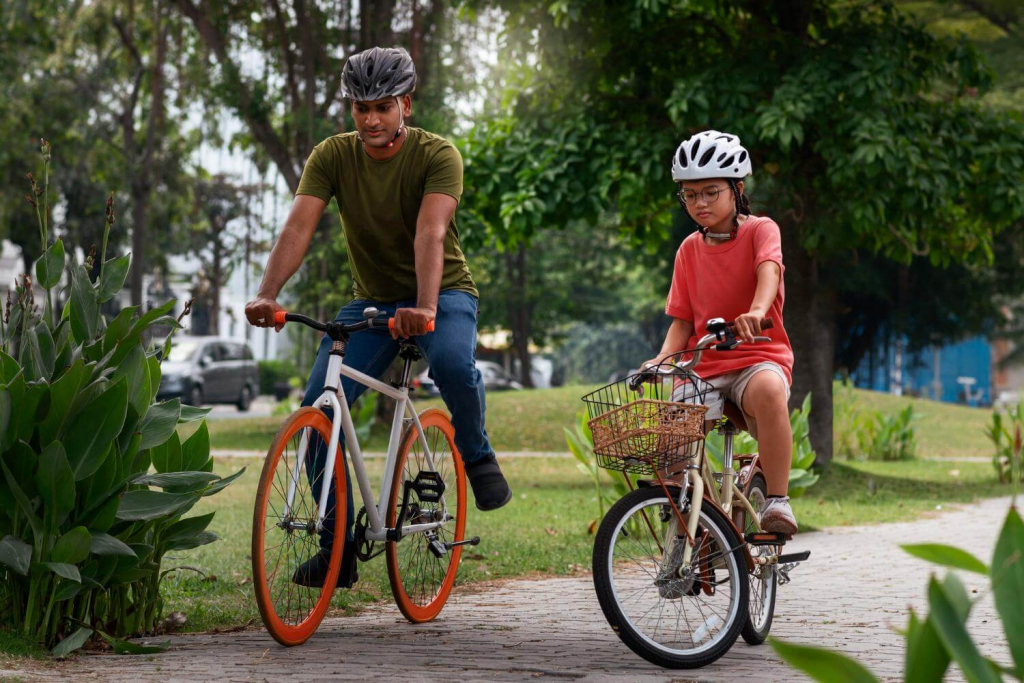
Start in a Safe Learning Environment for a Child to Ride
The location where your child learns to ride can significantly impact their experience.
Choose a flat, open area with minimal traffic and obstacles. Ideal locations include parks, quiet community roads, empty parking lots, or designated bike paths.
Avoid steep hills, busy streets, and areas with heavy pedestrian traffic during the learning stage. A calm environment allows children to focus on developing their skills without unnecessary distractions or hazards.
6 Tips to Get a Kid to Ride Bikes With Confidence
A safe setting is one of the most important aspects of teaching kids how to ride a bike safely.
1. Teach Balance Before Pedaling (Try a Balance Bike)
Many experts recommend teaching balance before introducing pedaling, especially to younger children.
One effective method is to lower the bike seat so your child can comfortably place both feet on the ground. Encourage them to push forward using one of their foot with another foot on the other pedal. while lifting them briefly to glide.
This technique helps children understand balance naturally and often makes the transition to pedaling much easier.
Training wheels and coaster brakes could also help many kids feel confident to ride a bike, as they prevent incidents where a child falls off the bike.
Some parents also choose balance bikes, which are designed specifically to teach balancing skills before children move on to traditional bicycles. These balance bikes allow young riders to ride a bike forward using one foot after the other foot to push them forward in small increments, so they get used to the sensation and practice gliding.
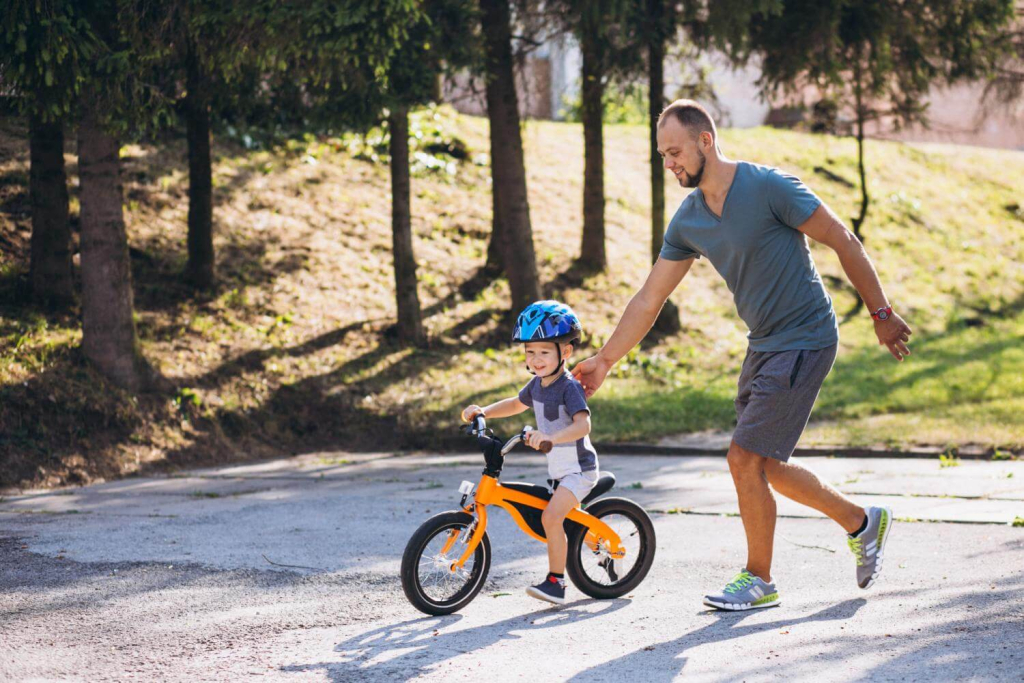
Once your child is confident with gliding on a balance bike or riding without your support on a bike with training wheels, you can walk a few feet behind them to ensure they’re safe while they navigate bike riding independently.
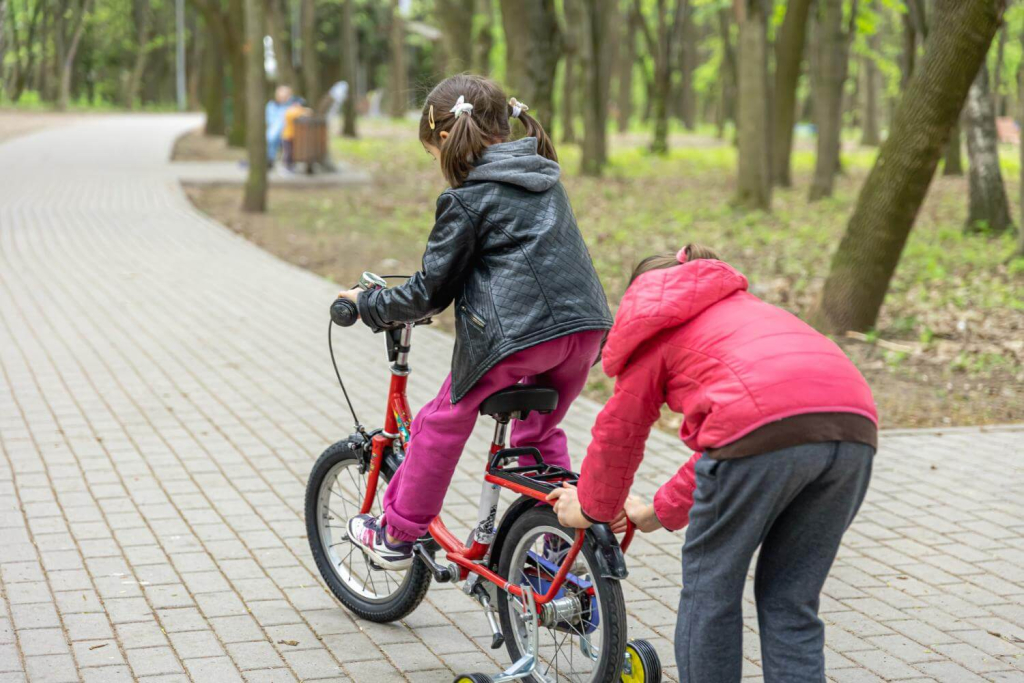
Image source: https://www.magnific.com/free-photo/two-little-girls-ride-bike-park-spring_15836970.htm
2. Introduce Pedaling Gradually
Once your child becomes comfortable balancing, it is time to introduce pedaling.
Hold your child’s bike gently by the seat or back while your child practices starting, stopping, and steering. Avoid gripping the handlebars tightly, as this may interfere with their ability to learn control.
Encourage them to look ahead rather than down at their feet or on the ground. Looking forward helps maintain balance and improves steering.
Most importantly, offer positive reinforcement throughout the bike lessons. Every small success builds confidence, especially if it’s your child’s first time sitting on a bike.
3. Teach Essential Bike Safety Rules
An important part of teaching kids how to ride a bike safely involves teaching road and riding etiquette.
Children should learn basic safety rules such as:
- Always stop before crossing roads.
- Look left, right, and left again before proceeding.
- Obey traffic signs and signals. Any rider should stop at red lights and only cross intersections on a green light.
- Ride in designated bike lanes whenever possible.
- Stay alert and avoid distractions.
- Keep both hands on the handlebars unless signaling.
- Watch for pedestrians and other bike riders.
Even if children are not riding on public roads yet, introducing these habits early helps establish safe cycling behavior for the future.
4. Practice Braking and Turning
Stopping safely is just as important as moving forward when your child rides a bike.
Teach your child how to use the hand brakes gradually rather than squeezing them suddenly. Sudden braking can cause loss of balance and falls.
Once basic riding skills improve, practice making controlled turns. Set up simple markers or cones to create a fun obstacle course that helps develop steering skills and bike control.
These exercises make teaching kids to ride a bike safely more engaging while reinforcing important balance techniques.
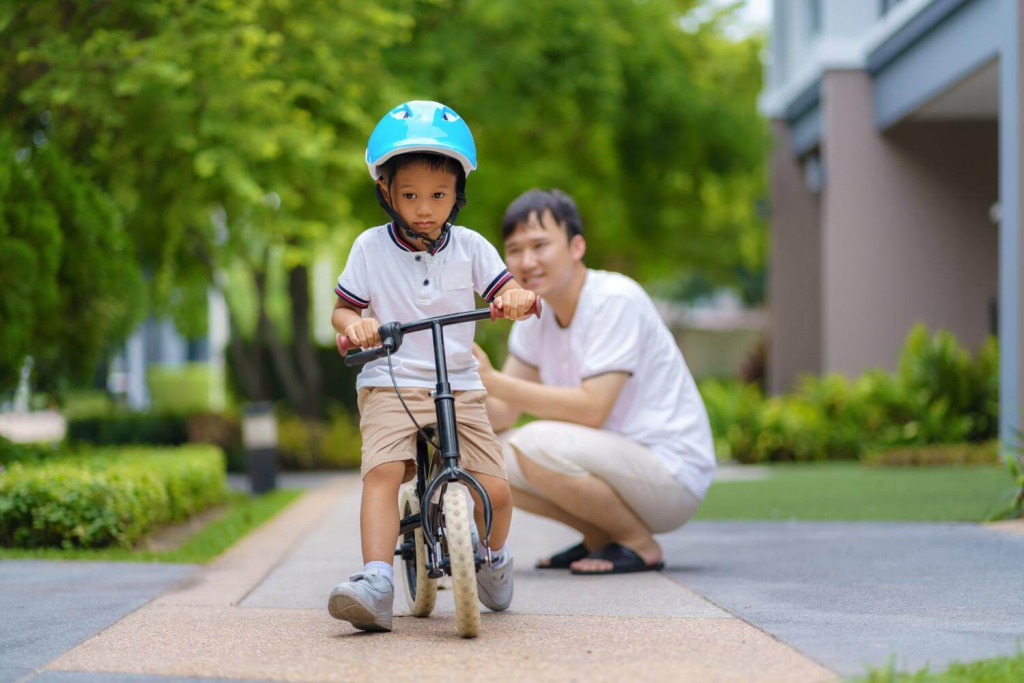
5. Build Confidence Through Consistent Practice
Every child learns at their own pace. Some may master cycling within a day, while others may need several weeks of practice.
Keep bike lessons short and enjoyable. Avoid putting pressure on children or expressing frustration if progress seems slow. Encouragement and patience are often the keys to success.
Celebrate milestones, whether it is balancing for a few seconds, completing a lap independently, or making a successful turn.
A positive learning experience helps children develop a lifelong love for cycling.
6. Be a Good Role Model
Children often learn by observing adults. Parents can reinforce safe cycling habits by following the same rules they teach.
Wear a helmet, obey traffic signs, stay aware of your surroundings, and demonstrate respectful behavior toward pedestrians and other cyclists.
When children see adults prioritizing safety, they are more likely to adopt these habits themselves.
Creating Family Memories Through Cycling at Camella
Teaching kids how to ride a bike safely is about more than learning a physical skill. It’s an opportunity to spend quality time together, encourage healthy habits, and create lasting family memories.
Family bike rides can become regular weekend activities that promote exercise, exploration, and meaningful bonding. Whether it is a quick ride around the neighborhood or an afternoon at a local park, cycling allows families to enjoy the outdoors together while building confidence and independence in children.
At Camella, we understand the value of safe, family-friendly communities that encourage active lifestyles. Our thoughtfully planned developments feature open spaces, parks, and pedestrian-friendly environments where families can enjoy outdoor activities together. These spaces provide children with opportunities to learn, play, and grow while creating memorable moments with their loved ones.
As families embrace healthy and active living, Camella continues to cultivate communities that support outdoor recreation, family bonding, and the simple joys of life, no matter what age you are.