



By Luzviminda7641 – Own work, CC0, https://commons.wikimedia.org/w/index.php?curid=127936399
The tradition of Visita Iglesia in Ilocos offers more than just a religious activity—it is a deeply meaningful spiritual journey that blends faith, culture, and history across some of the most iconic churches in the Philippines.
Every Holy Week, especially on Maundy Thursday and Good Friday, thousands of Catholics travel across several provinces like in Ilocos Norte and Ilocos Sur to visit a series of sacred sites, reflecting on the life, suffering, and sacrifice of Jesus.
Beyond devotion, this pilgrimage highlights the region’s architectural grandeur, with several churches recognized as a UNESCO World Heritage Site, showcasing the enduring beauty of Baroque churches and their unique earthquake baroque design.
Whether you are traveling with family, exploring heritage, or considering investment in a heritage city, Ilocos provides a rich and immersive experience shaped by centuries of faith and resilience.
The Meaning Behind Visita Iglesia
The term Visita Iglesia literally means “church visit.” Traditionally, devotees aim to visit seven churches, symbolizing the Seven Last Words of Jesus or His journey to Calvary.
In Ilocos, this practice becomes even more special as each church, chapel, or cathedral carries its own story—many dating back to the Spanish colonial era when Augustinian missionaries first established parishes across the region.
The act of moving from one parish to another is not only an expression of devotion but also an opportunity to explore the deep historical roots of Christianity in the country. From hilltop sanctuaries to coastal towns, every stop enriches both faith and understanding.
The Role of History in Ilocos Churches
The story of Ilocos churches is deeply intertwined with the history of the Philippines. Many were built during the Spanish colonial era, serving not only as places of worship but also as centers of community life.
Over the centuries, these structures have endured numerous earthquake events, wars, and natural disasters. During World War II and the Japanese occupation, several churches were damaged or repurposed, only to be rebuilt in the years that followed.
Today, their current structure stands as a testament to resilience, with layers of history visible in their architecture—from reinforced buttresses to restored facades.
A Journey Through Ilocos Norte
Paoay Church: A UNESCO Treasure
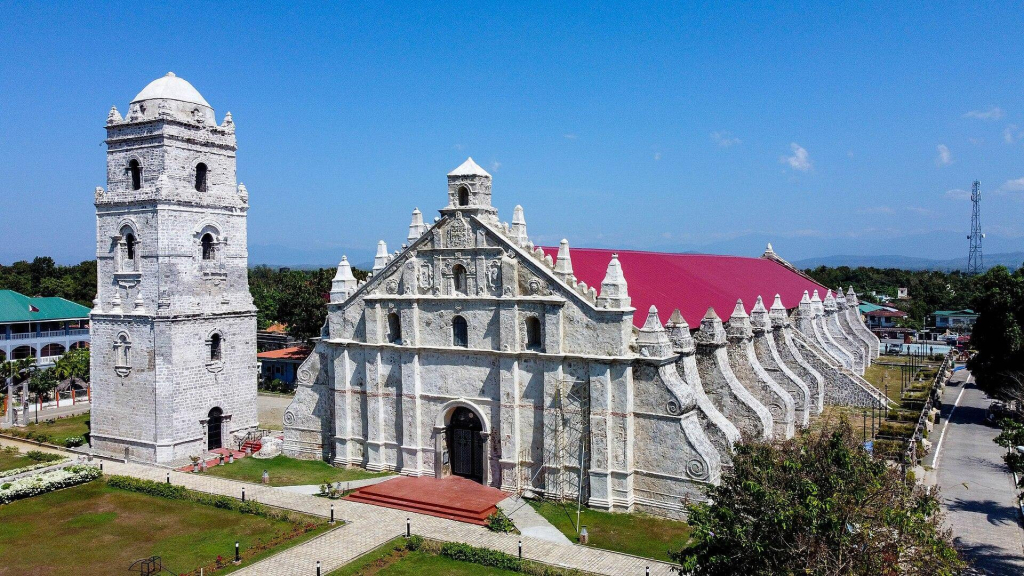
No Visita Iglesia route in Ilocos is complete without Paoay Church, formally known as the Saint Augustine Church. This architectural marvel is part of the UNESCO World Heritage Site known as the Baroque Churches of the Philippines.
Built in the late 17th century and completed in the early 18th century, the church is renowned for its massive buttresses, a defining feature of earthquake baroque design. These thick supports reinforce the structure against frequent seismic activity, making it both functional and visually striking.
The facade reflects a fusion of local and European influences, including touches reminiscent of Italian Renaissance design. Its grandeur, combined with its historical significance, makes it one of the most famous landmarks in Ilocos Norte.
By M0N MD – Own work, CC BY-SA 3.0, https://commons.wikimedia.org/w/index.php?curid=28744890
Laoag Cathedral and the Sinking Bell Tower
Another must-visit site is the Laoag Cathedral, also known as Saint William’s Cathedral, which serves as the seat of the diocese in the region. Located in the heart of the city, this cathedral has been a spiritual center since it was established during the Spanish period.
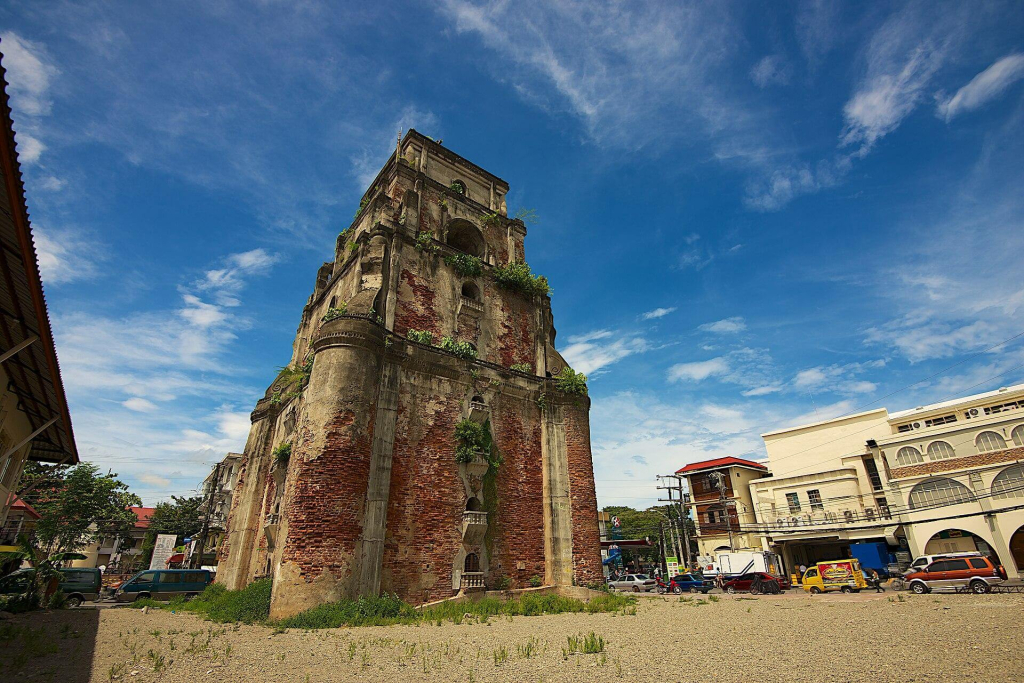
Just a short walk away stands the iconic Sinking Bell Tower, a separate belfry that has gradually sunk into the ground over the centuries due to its heavy structure and soft foundation. During the Spanish colonial era, the bell tower served as a watchtower, especially during times of conflict, including World War II and the Japanese occupation.
Together, these landmarks highlight the region’s resilience and the enduring role of faith through periods of upheaval.
Bacarra Church and Torre ti Bacarra
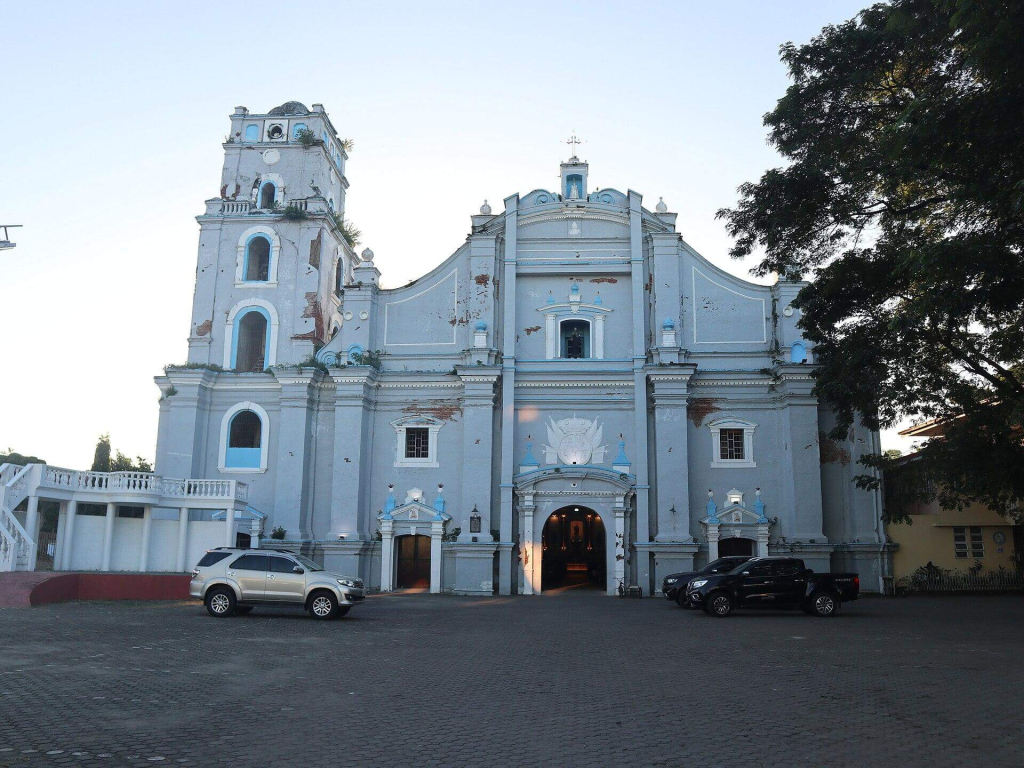
In the nearby town of Bacarra lies the historic Bacarra Church, also known as the San Andres Apostol Parish Church, dedicated to Saint Andrew. This church is famous for its detached bell tower, locally called Torre ti Bacarra.
Originally founded in the late 16th century, the church has undergone several reconstructions due to damage from natural disasters and war. The current structure reflects these layers of history, with its sturdy walls and simple yet elegant facade.
The tower itself, standing tall against the Ilocos skyline, is a reminder of the region’s enduring faith and architectural ingenuity.
By Patrickroque01 – Taken using my own camera Canon EOS M100, CC BY-SA 4.0, https://commons.wikimedia.org/w/index.php?curid=127482403
San Nicolas Church (Saint Nicholas of Tolentino Parish)
In the town of San Nicolas, you will find the church dedicated to Saint Nicolas de Tolentino, the San Nicolas Church. This parish church is one of the oldest in the region and is established by Augustinian friars.
Its simple yet elegant facade, coupled with its role in spreading Christianity in northern Luzon, makes it an important stop for those tracing the roots of faith in the country.
Exploring Ilocos Sur: A Heritage City Experience
Vigan Cathedral and the Archdiocese of Nueva Segovia
Moving south to Ilocos Sur, the heritage city of Vigan offers a unique blend of faith and culture. At its center is the Vigan Cathedral, officially known as the Metropolitan Cathedral of the Conversion of Saint Paul the Apostle.
This cathedral serves as the seat of the Archdiocese of Nueva Segovia, one of the oldest ecclesiastical jurisdictions in the Philippines. The church’s elegant facade, spacious interiors, and collection of religious artifacts make it a significant spiritual and cultural landmark.
Surrounded by cobblestone streets and preserved colonial houses, Vigan provides a setting that transports visitors back to the Spanish colonial era, making it an ideal stop during Visita Iglesia.
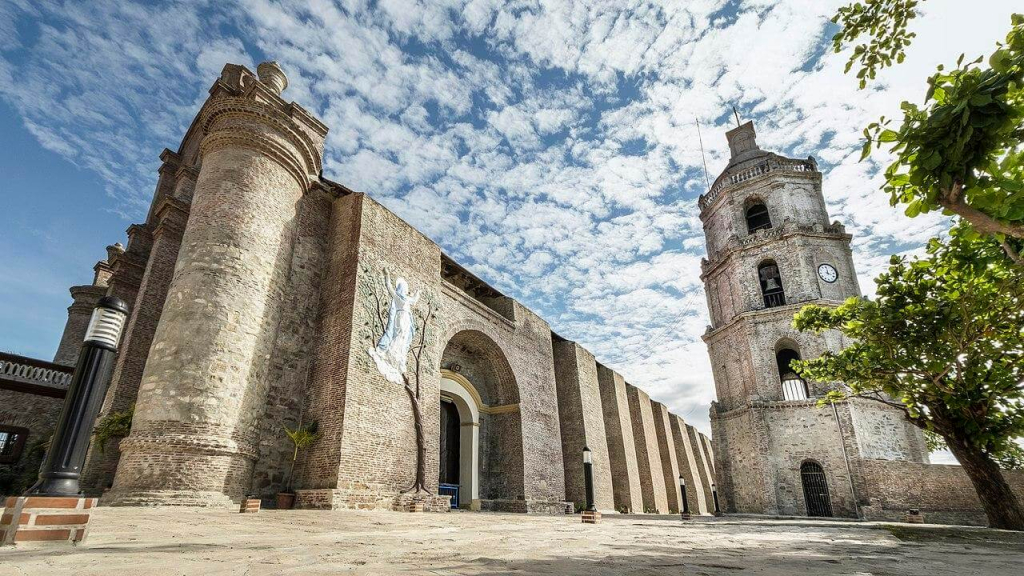
By Luzviminda7641 – Own work, CC0, https://commons.wikimedia.org/w/index.php?curid=128001548
Santa Maria Church: A Hilltop Sanctuary
Another UNESCO World Heritage Site, the Santa Maria Church—also known as Nuestra Senora dela Asuncion Church—is located in Sta. Maria, Ilocos Sur and is one of the most iconic pilgrimage destinations in Ilocos. Elevated as a minor basilica just last August 2025, it is considered one of the newest basilica in Ilocos Region. Unlike most churches built in town centers, this one is uniquely located on a hill, offering both strategic and symbolic significance.
Santa Maria Church was built on an elevated site to function as both a place of worship and a fortress. Established by Augustinian missionaries, the church’s fortress-like structure features thick walls and a commanding presence. Devotees must climb a series of steps to reach the church, adding a physical dimension to the spiritual journey.
Adjacent to the church is an old convent, which is historically significant and closely connected to the church complex. Its dramatic setting and distinctive architecture make it one of the most memorable stops in any Visita Iglesia itinerary.
Sahagun Parish Church (Saint John the Baptist Church)
Completing the must-visit churches is Candon’s Sahagun Parish Church, dedicated to Saint John the Baptist. While less grand than others on this list, it offers a more intimate setting for prayer and reflection.
This chapel-like parish highlights the grassroots nature of faith communities in Ilocos, where devotion is deeply woven into daily life.
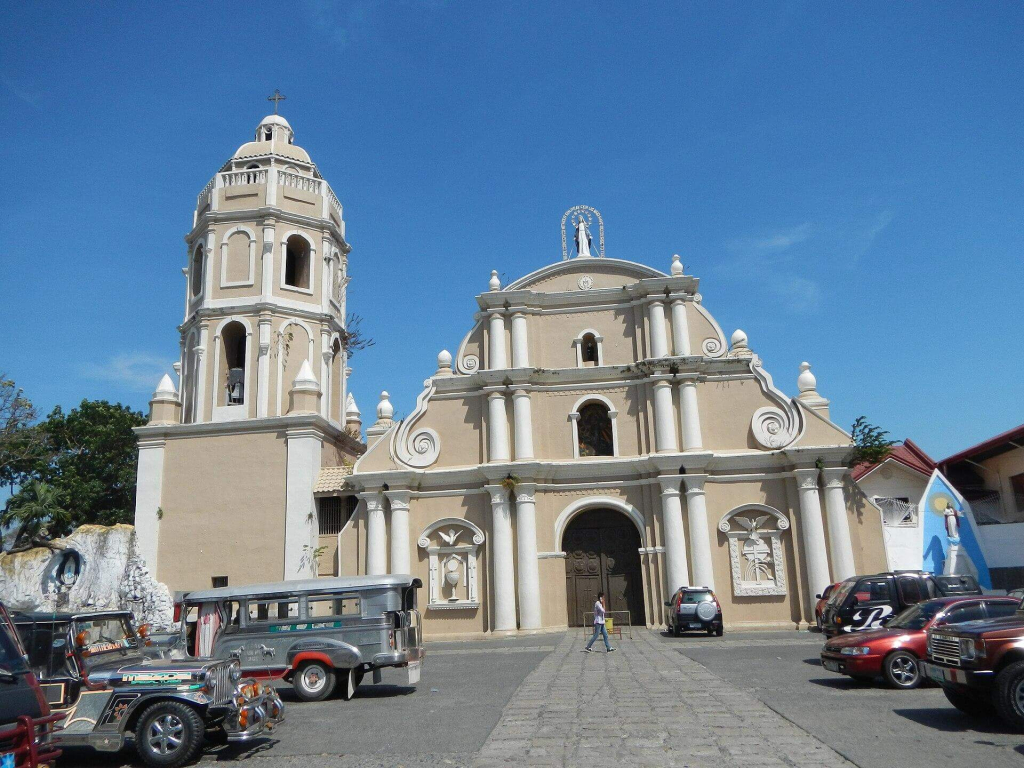
Image source: By Judgefloro – Own work, CC BY-SA 3.0, https://commons.wikimedia.org/w/index.php?curid=31802969
Discover La Union in the Ilocos Region
Our Lady of Charity in Agoo, La Union
In La Union, the widely visited pilgrimage church and the only minor basilica in the region is the Minor Basilica of Our Lady of Charity in Agoo, elevated to a minor basilica in 1982 by the late Pope John Paul II. It was also designated as one of the Pilgrim Churches for the 2025 Jubilee Year. The miraculous image of the Nuestra Señora de Caridad, also called “Apo Caridad,” is enshrined in the basilica. The basilica features a unique Mexican-Baroque style with grey adobe stones and a two-tower façade.
Planning Your Route: Visita Iglesia in Ilocos
A typical Visita Iglesia in Ilocos can be completed within a day or spread across several days, depending on your pace and preferred travel time.
Starting early in the morning allows you to avoid crowds and fully immerse yourself in each stop. Many travelers also attend mass or simply pause for quiet prayer, reflecting on the significance of each cross and sacred image encountered along the way.
A Real Estate Perspective: Why Ilocos Continues to Attract Interest
From a real estate standpoint, the enduring appeal of Ilocos heritage plays a significant role in driving tourism and property interest. The presence of a UNESCO World Heritage Site, combined with well-preserved heritage city landscapes, makes Ilocos a compelling destination for both visitors and investors.
Properties near major landmarks such as Paoay Church, and Vigan Cathedral often benefit from steady tourist traffic, especially during Holy Week and other religious events.
Moreover, the region’s rich cultural identity—anchored in its churches, traditions, and historical landmarks—creates a unique sense of place that continues to attract families, retirees, and entrepreneurs looking to invest in the province.
More Than a Tradition: A Lasting Experience
Undertaking Visita Iglesia in Ilocos is more than completing a checklist of seven churches. It is an opportunity to connect with faith, appreciate architectural brilliance, and walk through the living history of the Philippines.
From the grandeur of Baroque churches to the quiet charm of rural chapels, every stop invites reflection and discovery. Whether you are drawn by devotion, curiosity, or the desire to explore, Ilocos offers a journey that resonates long after the pilgrimage ends.
So as Holy Week approaches, consider making Ilocos your destination. Begin your journey at dawn, travel from town to city, and let each church, tower, and sacred space guide you through a meaningful and unforgettable experience.