





Image source: Freepik
Introduction
Remote work in the Philippines has moved from a temporary setup to a long-term reality. Many Filipino professionals are now working remotely full-time, yet the same issue keeps showing up: blurred lines between work and personal life. Without clear remote work boundaries, it becomes difficult to separate work hours from personal time, especially when everything happens under one roof.
In a previous blog post, we explored how remote workers adapted to flexible setups. Now, the focus shifts to rebuilding the structure. The goal is not rigid control, but a healthier, more sustainable rhythm that protects mental well-being, physical health, and overall well-being. Not everyone struggles in the same way, but for many, maintaining work-life boundaries has become a daily challenge.
These practical strategies follow the natural flow of a day, helping you set boundaries that actually hold.
Define No-Work Zones to Protect Your Personal Life at Home
Before the workday even begins, your remote work environment already shapes your behavior. One of the most effective ways to protect your personal life is to define spaces where work does not exist.
Start by identifying a designated area in your home that is strictly for rest. This could be your bed, dining space, or any corner tied to personal activities. Once defined, these become your no-work zones. No laptops, no digital devices, no work-related notifications. This physical separation helps reduce blurred boundaries between work and personal life.
For many Filipino households where space is shared, this may require small adjustments. Even in compact homes, setting clear boundaries between zones creates a significant difference in how your brain processes work and rest. Over time, your home life becomes more intentional, not something constantly interrupted by tasks or notifications.
Optimize Your Dedicated Workspace for Focus and Physical Comfort
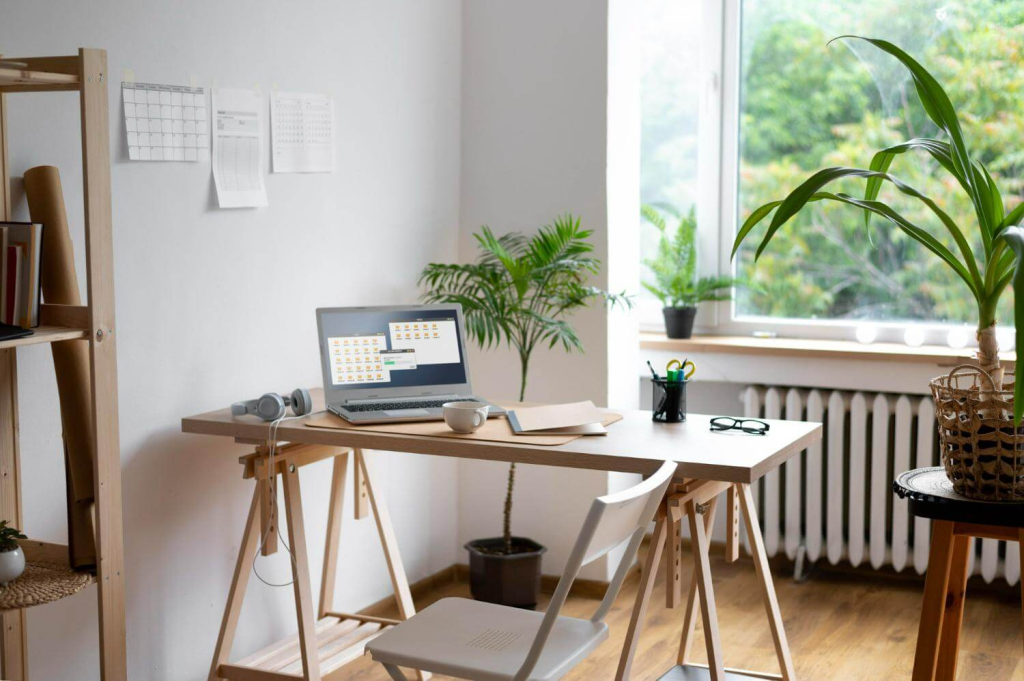
Once your no-work zones are protected, the next step is to create a dedicated workspace that supports focus. This is where your work mode happens consistently.
Your work environment should be simple but intentional. Remove clutter that does not support your tasks. Adjust your chair and lighting to protect your physical health, especially during long hours of working remotely. Position your setup in a way that helps minimize distractions, whether that means facing away from high-traffic areas or using partitions.
In residential communities like Camella Laguna, where homes are designed with flexible spaces, it becomes easier to carve out a dedicated workspace that supports both productivity and comfort. Even a small corner can be transformed into a consistent work zone that reinforces routine.
A stable workspace does more than improve focus. It strengthens your ability to maintain work-life boundaries because your brain begins to associate that space with work and nothing else.
Lock in Fixed Work Hours and Enforce a Daily Stop Time
Structure your day with clearly defined work hours. Without designated work hours, remote work can easily extend beyond what is reasonable.
Choose a start time that aligns with your peak focus. Then define a firm end time. These are your designated hours, and they should not easily extend unless absolutely necessary. Many remote employees fall into the habit of stretching their office hours because work is always within reach.
To avoid this, set a maximum number of dedicated work hours each day. Track them. Once you reach that limit, you stop. This approach helps maintain a healthy work-life balance and prevents burnout.
Time boundaries are one of the most powerful tools for maintaining work-life boundaries. When respected consistently, they protect both your productivity and your personal time.
Set Clear Agreements with Family Members to Reduce Interruptions
Working remotely in a Filipino household often means sharing space with family members. Without clear expectations, interruptions become frequent and frustrating.
Have a direct conversation with your household about your schedule. Explain your work hours and when you need uninterrupted focus. Use a visual cue, such as headphones or a closed door, to signal when you are in work mode. It also helps to define what counts as urgent. Not every interruption is necessary. Setting these personal boundaries early reduces tension and helps everyone adjust to your routine.
Setting healthy boundaries at home means recognizing that both your work and your household responsibilities are equally important. For example, when you explain your schedule clearly, you help family members understand when you need to be physically present for work and when you are available for personal time, making it easier to set remote work boundaries that everyone respects.
Strong support from family members makes a noticeable difference. When your home life respects your work, it becomes easier to stay focused and productive.
Image source: https://www.freepik.com/free-photo/close-up-woman-writing-with-pencil_15599520.htm
Structure Tasks to Prevent Work from Expanding Into Personal Time
One of the biggest reasons for blurred lines is unstructured work. When tasks are open-ended, work tends to spill into personal time.
Break your workload into specific tasks with clear limits. Assign each one a realistic duration within your schedule. Once that time is up, you move on, even if the task is not fully complete.
This approach prevents work from taking over your entire day. It also helps you stay focused on what actually matters instead of getting lost in endless revisions.
Maintaining this structure takes discipline, but it creates a system where work fits into your life, not the other way around.
Take Task-Based Breaks to Support Mental and Physical Health
Breaks are often overlooked, but they play a critical role in maintaining both mental health and physical health.
Instead of relying on fixed intervals, take regular breaks after completing a meaningful unit of work. These short breaks allow your mind to reset and your body to recover from long periods of sitting.
Step away from your workspace during breaks. Stretch, walk, or simply rest your eyes. Avoid using this time for more screen exposure, including social media or work-related notifications.
Taking regular breaks is not a luxury. It is necessary for sustaining energy and focus throughout the day.

Control Notifications and Set Clear Expectations with Your Team
Digital overload is one of the biggest threats to remote work boundaries. Slack notifications, emails, and constant pings from collaboration tools can make it feel like you are always on call. Here are a few ways to help manage this:
- Customize your notifications.
- Turn off non-essential alerts outside your designated hours.
- Limit work-related notifications to only what truly requires your attention.
- At the same time, align with your team on clear expectations.
- Define response times so you are not pressured to reply instantly.
Remember that availability does not equal productivity. For many employees, this shift requires a mindset change. Being constantly online is not the goal. Being effective within your schedule is.
Use a “Last Task Rule” to End Your Workday Without Spillover
Ending the workday is where many remote workers struggle the most. Without a clear stopping point, work can easily extend into the evening.
At the start of your day, identify your final task. Once it is completed, your workday ends. No additional tasks, no quick follow-ups.
This simple rule creates a clean break between your professional and personal life. It also prevents the habit of overworking, which often leads to burnout.
Maintaining this boundary requires consistency, but the long-term benefits are worth it.
Schedule Non-Negotiable Personal Time Using Google Calendar
Protecting your personal time requires the same level of intention as scheduling meetings.
Use Google Calendar as a powerful tool to block time for personal commitments. This includes meals, rest, social interactions, and quality time with loved ones. Treat these blocks as non-negotiable.
Planning personal activities in advance ensures that your life does not revolve entirely around work. It also helps you stay fully present during these moments, without the distraction of digital devices.
A healthy work-life balance is built on these small but consistent decisions.

Conclusion
Rebuilding remote work boundaries in 2026 does not require drastic changes. It starts with small, consistent actions that shape how your day unfolds.
From defining your space to managing your schedule and protecting your personal time, each step contributes to a more balanced work life. The benefits go beyond productivity. They support your mental well-being, strengthen your relationships, and create a more sustainable way of working remotely.
Start with one or two changes. Build from there. Over time, these boundaries will become second nature, helping you create a life where work and personal priorities can coexist without constant conflict.