



Image source: Freepik
Introduction
Living in the Philippines means preparing for typhoons, floods, earthquakes, and other sudden events. A well-stocked and organized emergency kit can be the difference between chaos and control when an evacuation order comes, roads are blocked, or utilities fail. Below is a practical guide to emergency bag essentials that covers what to pack, why it matters, and what being prepared means for your household
1. Living With Local Disasters and the Value of an Emergency Go Bag
Disasters in the Philippines often unfold quickly, and during the early hours are when families feel most exposed. The right basic supplies in a reliable go bag can let a person or family respond to immediate threats, secure shelter, and maintain dignity during displacement. National agencies like PAGASA issue advisories and severe weather bulletins through broadcast partners and official channels, so include a battery-powered radio or access to local radio broadcasts in your planning, like the NOAA Weather Radio.
2. Clothing and Layering for Your Go Bag
Clothing choices are more than comfort: they protect. Pack an extra pair of quick-dry clothes, a lightweight warm blanket, and an insulating sleeping bag if room allows. Sturdy footwear matters — closed-toe shoes that can handle debris will protect your feet during evacuation routes. Include an extra set of glasses if someone in the household relies on them, and keep prescription medications readily accessible in the bag. These recommended items reduce the risk of infection and injuries when shelters or routes become crowded.
3. First Aid and Medical Basics
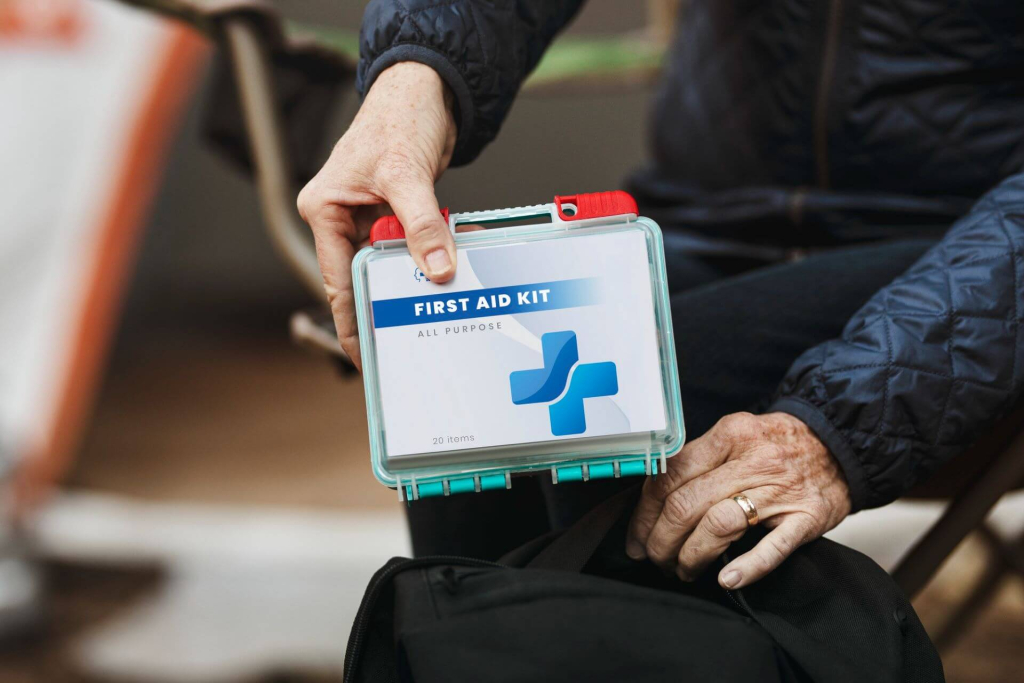
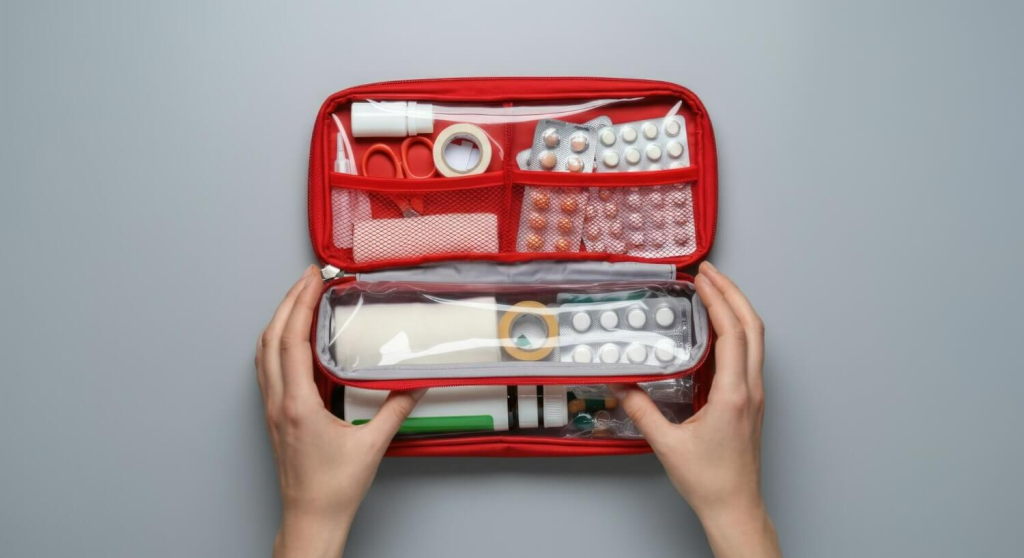
Every emergency kit must contain a solid first aid kit or aid kit with bandages, antiseptic, gauze, adhesive tape, and tweezers. Add first aid essentials like a thermometer, cotton swabs, and hand sanitizer for wound care and hygiene. Keep at least a week’s supply of any essential medications, and store medical information (medical history, allergies, prescriptions) with the kit. If someone in your family uses hearing aids, include spare batteries and a small storage case. The goal is to stabilize injuries and maintain chronic care while professional services are limited. Authoritative kit checklists from disaster response organizations stress including first aid and extra batteries among basic supplies.
4. Food and Water Storage
Plan for at least three days of non-perishable food and canned food as a baseline, and aim for more if you can. Include manual can opener in the pack so canned goods can be eaten even when power is out. For drinking water, store at least one gallon per person per day; this covers drinking and minimal sanitation for several days and aligns with emergency guidance. Keep bottled water sealed and rotate stock per expiry dates. Add simple utensils and cups so your family can eat and drink with minimal fuss. For households with animals, pack pet food and other pet supplies — a week’s supply of dry food and a spare leash or carrier keeps pets safe and reduces stress for the whole household.
5. Hygiene and Personal Care
Hygiene protects health and morale. Your kit should include toothpaste, toothbrushes, moist towelettes or wet wipes, toilet paper, and other personal hygiene items such as basic feminine care supplies. Face masks and a dust mask are useful when the air quality is poor from storms or dust. Keep diapers if you have babies or elderly family members who need them.
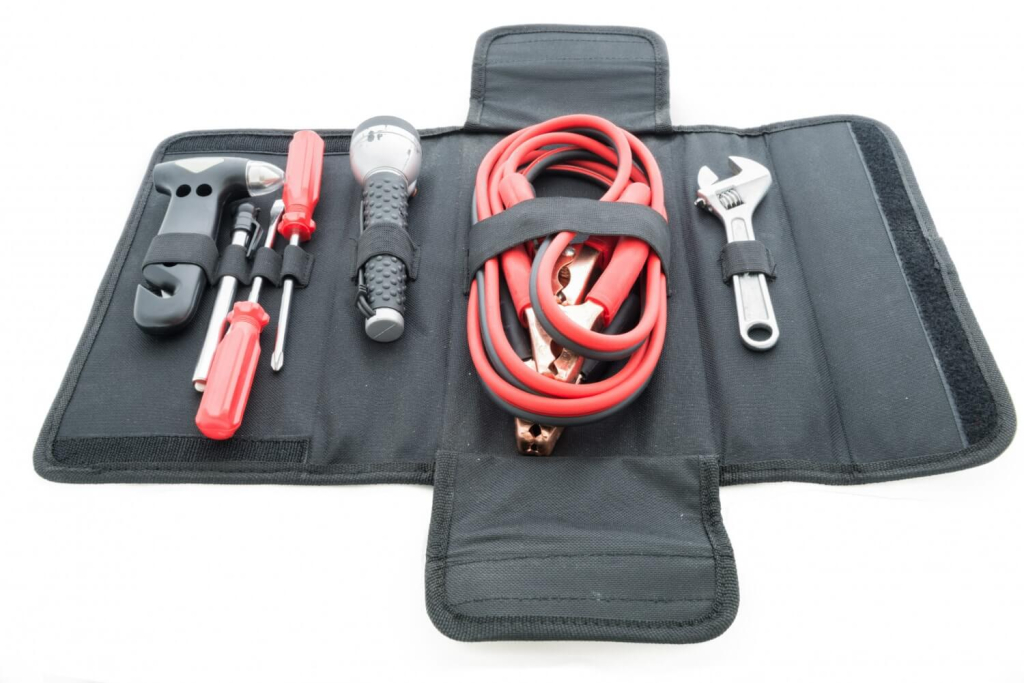
Image source: https://www.freepik.com/premium-photo/emergency-kit-car-jack-jumper-cables-car_3747515.htm#from_element=cross_selling__photo
6. Tools and Repair Items
A few compact tools can solve big problems on the fly. Pack a compact multi-tool, a small wrench for turning off utilities if needed, and duct tape to patch or secure items. Small plastic bins can store grouped supplies and keep them dry. Include gloves for moving debris or protecting hands while working. A small car tool kit is also useful if you must improvise. These tools let you protect possessions and adapt to damaged environments.
7. Lighting and Backup Power
Lighting and power keep communications and safety running. Include flashlights or headlamps with spare batteries and a battery-powered lantern or lamp. A reliable power bank and a phone charger help keep phones alive for calls and alerts; keep at least one phone charger in the bag so you can charge a phone from a power bank.
8. Important Documents and Identification
Keep a written local map, a list of emergency contacts, and copies of important documents stored in a waterproof pouch. Print physical lists of insurance policies, insurance documents, and identification details so you can claim help and shelter more quickly if needed. Carry copies of important documents such as passports, IDs, mortgage or land papers and birth certificate. Keep originals safe if possible, and consider digital encrypted backups as a secondary measure. These documents prove identity and entitlement to relief, aid, or compensation and are often required to access emergency services or financial assistance after displacement.
9. Cash and Small Comfort Items
Digital payment systems may be offline; pack small bills in a sealed pouch for immediate purchases. Keep some change and small notes per person so you can pay for transport, food, or minor services during the first 24–72 hours. Include light games or a book for children to reduce stress. A small warm blanket or emergency blanket is inexpensive and useful for warmth; a few comfort items make huge differences in morale.

10. Regular Updates and Long-Term Readiness
A prepared kit is a living thing. Rotate non-perishable food, check expiration dates on canned food, replace bottled water and extra batteries regularly, and confirm that your first aid kit still contains needed supplies. Keep an inventory in a notebook or on your phone of the following items so you can quickly review what needs replacing. Storing items in plastic bins helps keep them dry and organized.
If your household is near shopping centers, like residents of Camella Homes Savannah in Iloilo who have easy access to Vista Mall Iloilo, routine replenishment of items such as toothpaste, wet wipes, and a manual can opener is simpler — but don’t rely solely on retail access during an active event.
Verify your bag is grab-and-go by making sure that you can actually carry it when an emergency arises. It would be good to keep a smaller kit in your car for evacuation while traveling. Maintain one full kit per person if space allows, confirm that everyone knows where the bag is stored and what’s inside, so the whole family can act fast.
Conclusion
Preparing a reliable emergency bag is one of the most practical acts of care a Filipino household can take. The threats we face may be unpredictable, but the way we respond does not have to be. A well-organized set of essentials gives every family a sense of steadiness at a time when routines collapse, and decisions must be made quickly.
What you pack today becomes the support you rely on when movement is restricted, communication is limited, and resources take time to reach affected areas. Building and maintaining this bag is not about expecting the worst; it is about knowing your family is ready to move, adapt, and protect one another when circumstances change without warning.