




Christmas in Iloilo does not need a packed itinerary. The holiday season in Iloilo City and across Western Visayas has its light festivals and fireworks, but most of the good moments are small: a bowl of Pancit Molo after a dawn Mass, a coffee at a neighborhood cafe, an evening along its riverbanks and on the plaza. This guide covers the Christmas lights, heritage churches, meals, and practical details for a relaxed December trip that can stretch past New Year’s Day.
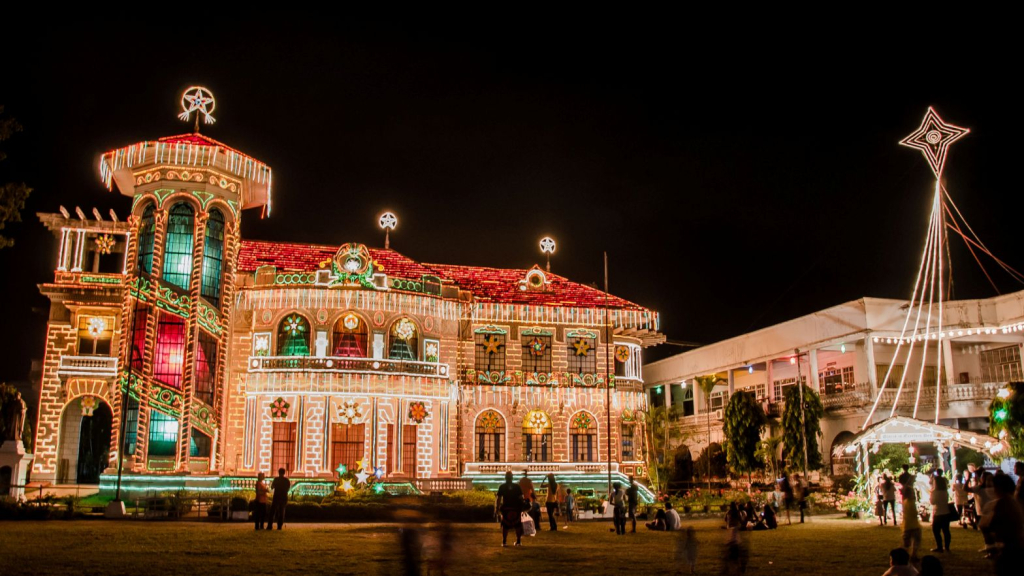
Christmas in Iloilo blends faith, family, and community
The celebration rests on two things: long-held Catholic faith and local traditions that Ilonggo households have kept for generations.
Families gather at ancestral homes for reunions, and the table is where the event happens. Noche Buena, the traditional midnight feast on Christmas Eve, brings relatives home from Manila, Cebu, and abroad. The emphasis falls on family unity and community sharing: food sent to neighbors, gifts for children, and an extra seat for friends who drop by on Christmas Day. In the evenings, carolers walk from house to house singing daigon, the Hiligaynon word for caroling. Because Christmas is celebrated at home first, many neighborhoods feel busiest on December 23 and 24, when markets sell out of ingredients and jeepneys fill with people carrying boxes of gifts. A visitor arriving during the Christmas season will notice that the best moments often happen in living rooms and church courtyards.
The season does not end on December 25. It continues through New Year’s Eve and New Year’s Day, then reaches the Dinagyang Festival in January and Fiesta Candelaria in Jaro on February 2. For visitors, that means celebrations are available in December, January, and February alike, and the December holidays are only the first stretch of a longer celebration.
Christmas lights and displays across the city and province
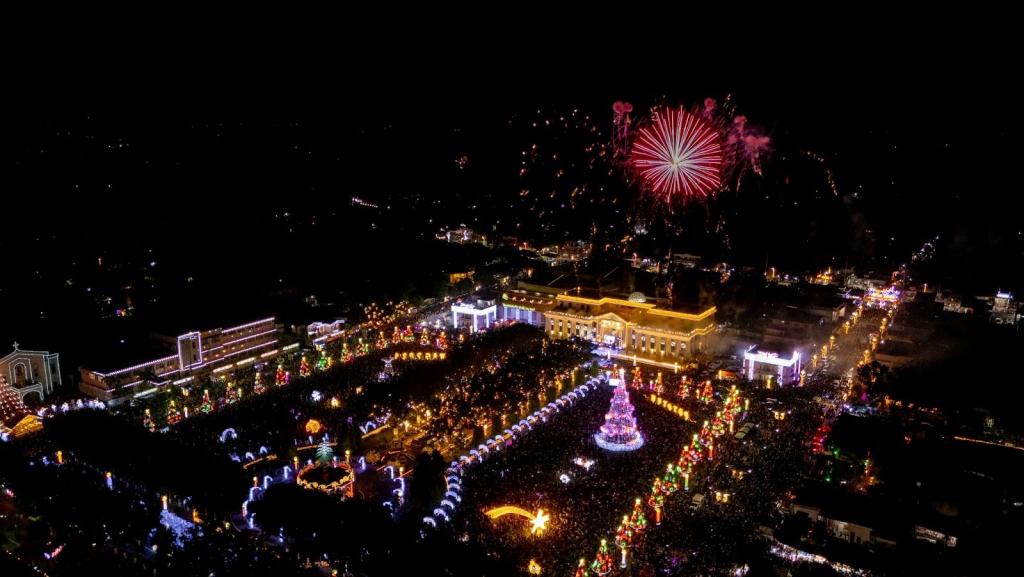
The most visible part of the season is light. Public spaces in the city proper are adorned with grand holiday displays, from lit trees in the plazas to decorated streets, and the local government, schools, and businesses all contribute. Christmas displays tend to go up in late November or early December and stay lit until the first week of January.
The Iloilo Provincial Capitol is one of the most commonly visited stops in the city during the Christmas season. The provincial government dresses the building and its grounds in lights every year and holds a switch-on with fireworks, and the theme changes from one season to the next. Museo Iloilo sits close by, so an afternoon at the museum can lead into an evening at the Capitol.
Several schools join in. The University of San Agustin and the Western Institute of Technology in Lapaz have mounted their own lights in past seasons, which makes a short evening drive through the city worthwhile even without a fixed destination.
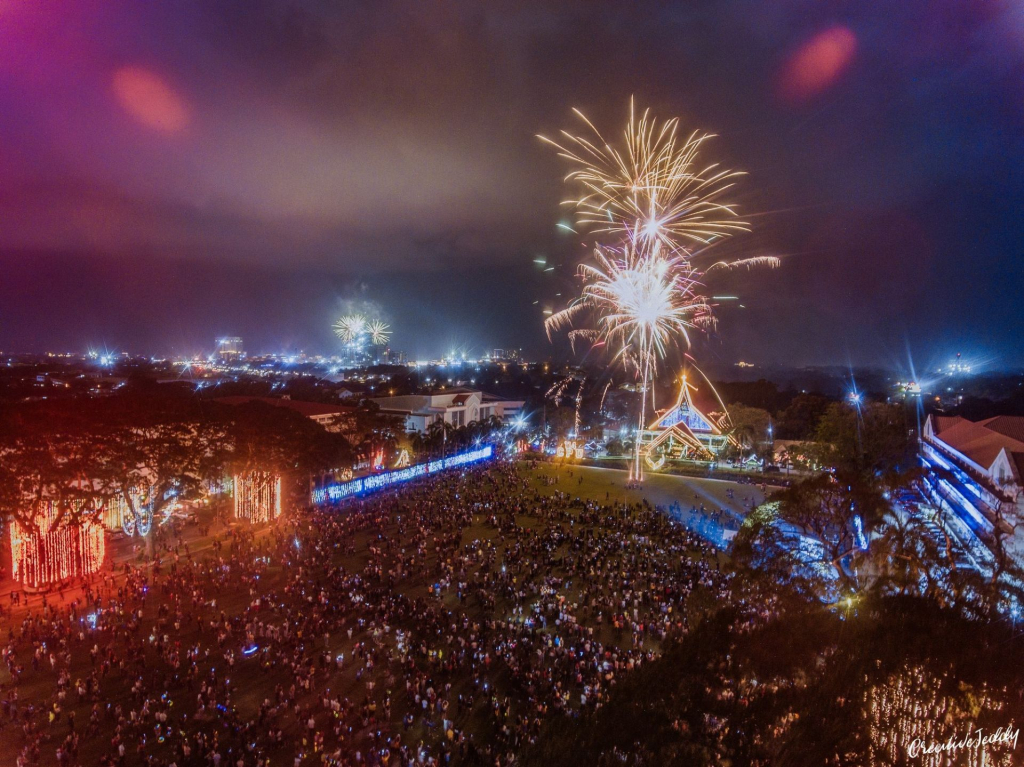
The best-known stop is Central Philippine University in Jaro. Its Festival of Lights and Music at Central has been organized with the university’s alumni association since 1998. The switch-on usually falls in the first week of December and comes with a fireworks display. Past turnouts have been estimated at 20,000 or more, and the Iloilo City Council has declared the campus a tourism site. A jeepney marked Jaro CPU from the city proper stops at the gate, so a private car is not needed.
Farther out, the town of Pototan hosts the Iwag Festival, which opens around early December and runs into early January. “Iwag” means light, and the plaza becomes a small Christmas village with street food stalls that make it a food festival as much as a light show. Pototan is about 30 to 40 minutes from the city and is widely known as the Christmas Capital of Western Visayas. Other towns in the province hold their own local light festivals, each showing creativity and community pride. Evening visits make for better photos, though crowds are heavier on weekends. Dress lightly, bring small bills for street food, and expect slow-moving foot traffic near the plaza. It is a fun outing for children, who tend to enjoy the walk-through displays and the street stalls more than the speeches at the opening program.
Heritage churches and Simbang Gabi
Heritage churches play a huge role in how Iloilo marks Christmas, and several are worth visiting beyond Mass.
Simbang Gabi, the nine dawn Masses held before Christmas, runs from December 16 to 24, and some also still call it Misa de Gallo. Parishioners attend before work, and churches fill early, so arriving ahead of the start time is sensible.
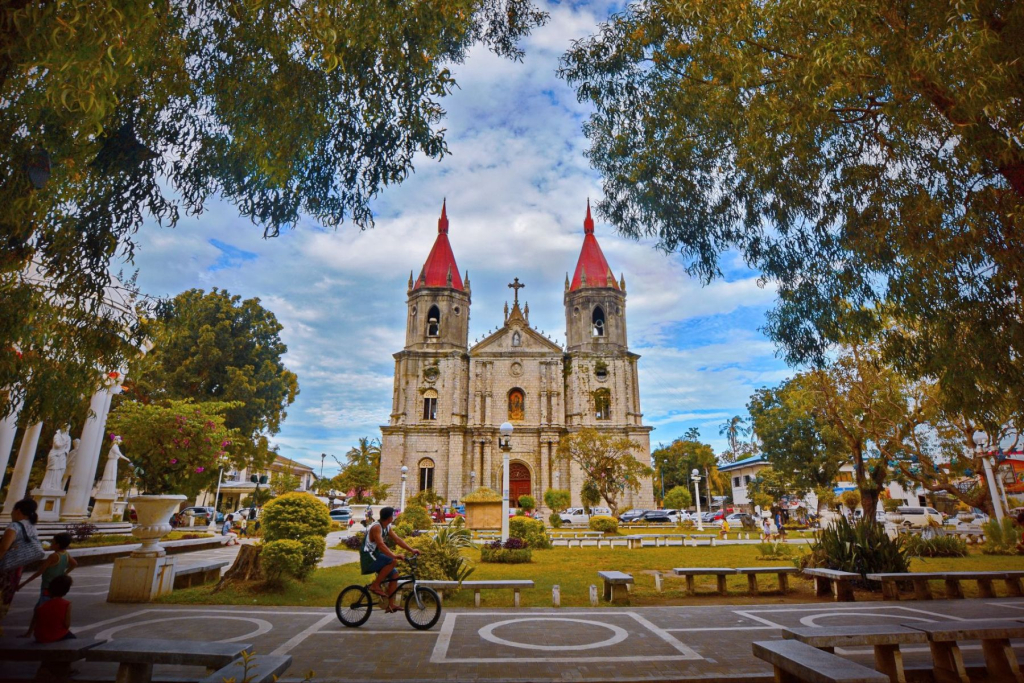
Some of the essential stops include the Molo Church, which was built between 1831 and 1888 from coral stone and has 16 statues of female saints lining the nave, earning it the nickname “feminist church.” Next is the Jaro Cathedral, which dates to 1874 and is known for its detached bell tower that stands across the plaza from the main building. The beauty of both buildings is easiest to appreciate in daylight, when the coral facade of Molo Church and the brick belfry in Jaro are fully visible. Both are active parishes, so a visitor should keep voices low and avoid walking in during the liturgy. Anyone present at a dawn Mass will see parishioners of all ages, which explains the season better than any exhibit.
Where to dine for local flavors and international cuisine
Iloilo is recognized as a UNESCO Creative City of Gastronomy, and the places that earn the title are usually the small ones. Family-run kitchens, market stalls, and heritage houses have built their reputations over years of repeat customers, which makes them the most reliable places to dine in December.
Camiña Balay nga Bato in Arevalo is a good example. The century-old ancestral house serves traditional Pancit Molo, a clear soup with wontons, alongside thick hot chocolate made from tablea. Antiques fill the rooms, so the stop easily takes a few hours.
In Molo, Molo Mansion is a well-preserved heritage house with a cafe and food stalls selling local delicacies. It is also known for its famous Molo soup. Happy Endings Creamery, nearby, adds local flavors in frozen form and makes an easy stop after a walk around the plaza.
Iloilo is also a big coffee city. Independent cafes sit everywhere, from market counters to neighborhood shops, and many serve beans grown in the province. Madge Café, a long-running coffee shop in La Paz public market, has a loyal following among locals. The Yield Specialty Coffee in Jaro serves Iloilo-grown beans alongside biscocho and other local favorites. Recently, the city government’s Kape Ta sa Merkado drew more than 18 local coffee shops to the Iloilo Central Public Market, which shows how seriously the city takes its cup. A coffee before a dawn Mass or after an evening at the lights is never hard to find.
For international cuisine and a wider menu, malls such as SM City Iloilo offer diverse dining options for different tastes, which helps when a group of friends cannot agree on where to dine. The meals visitors remember most, though, tend to come from the smaller kitchens.
Shopping for local products and affordable items
Gifts are easy to find, and pasalubong shopping is part of the trip for most visitors. Calle Real in the city proper is known for affordable shopping, and its older buildings make browsing pleasant even for those who buy little.
At Molo Mansion, the souvenir shop carries artisanal gifts. Camiña’s heritage store sells tablea, sinamak, and hablon textiles, all good local products to bring home. Locals often buy these local favorites in bulk for relatives, so stocks of tablea and sinamak can run low closer to Christmas Day. Malls such as SM City Iloilo, one of the more visited in the city, carry a mix of local and international brands for anyone who prefers to shop in air-conditioned comfort.
Planning your trip for transport, lodging, and timing
Public transportation covers most of the route. Jeepneys connect the city districts, taxis fill the gaps, and vans to Pototan leave from Tagbak Terminal. Other towns, including Santa Barbara, are within reach of the city by van or jeepney, which makes a half-day trip practical for travelers who want to see more of the province. A hotel in the city proper makes a practical base, and a room is worth reserving early because December bookings fill quickly. A stroll along Sunset Boulevard or Iloilo River Esplanade, the city’s riverside park, is an easy way to end the day.
Visitors with only a few days can spend one morning on churches and the museum, another on food in Arevalo and Molo, and one evening each at Central Philippine University and Pototan. Those making a last trip of the year can time arrival for Christmas Eve or New Year’s Eve, when households gather for dinner and fireworks light up the sky across the province. Restaurants and shops may keep shorter hours on December 24 and 25, so confirm times before heading out.
A holiday season worth returning to
Christmas in Iloilo suits guests of every age. Children enjoy the lights, friends meet over long meals, and families fill the pews at dawn. The spirit of the season shows in ordinary moments, which is also why planning matters. A loose schedule leaves room for a bowl of Pancit Molo, a plaza lit after dark, a carol sung from a doorstep.
Plan around the lights in early December, the dawn Masses before Christmas, and the meals that follow, and the trip leaves a person with memories that last into January. The joy and hope that Ilonggos bring to the holidays are easy to join as a visitor. Check out more posts about Iloilo City and its holiday festivities before heading out to maximize your trip. Post inquiries and comment on the local government tourism office to get more information.