




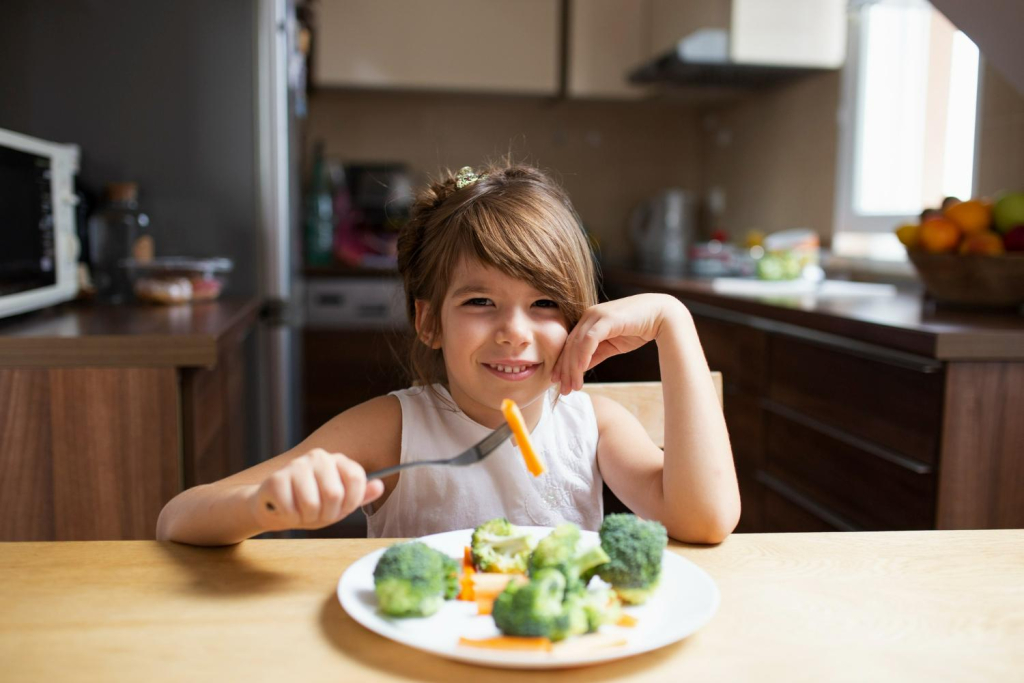
Getting kids to eat vegetables can feel like a daily challenge, especially when broccoli gets pushed aside or spinach mysteriously disappears from a child’s plate.
Many parents want their children to enjoy healthy foods, but pressure and arguments during mealtimes can make picky eaters even more resistant to trying something new.
7 Tips for Getting Kids to Eat Vegetables
The good news is that children can gradually learn to enjoy vegetables and other foods when parents make healthy eating a positive, familiar, and fun experience.
With a few practical tips, you can encourage your child to eat more vegetables and other fruits without turning every meal into a struggle.
1. Make Veggies Fun and Appealing
One way to encourage kids, especially kids who are picky eaters, to eat vegetables is to make them visually interesting. Instead of serving a large pile of vegetables and fruits, try cutting asparagus, cucumbers, and bell peppers into easy-to-hold sticks or fun shapes. Arrange fruits and vegetables into colorful patterns alongside other foods your child already enjoys.
You can also give vegetables playful names or let children create their own veggie faces using peas, mushrooms, and sliced carrots. Making veggies fun can help reduce the pressure associated with trying new foods and make the experience feel more like play than a requirement.
Presentation matters, but avoid making every meal or snack an elaborate project. Simple changes, such as offering a colorful veggie side dish or serving vegetables in a small bowl, can make a difference over time.
2. Introduce New Vegetables Gradually
Children tend to feel more comfortable with familiar foods, so introducing a new vegetable alongside something they already like can help. If your child enjoys pasta, for example, mix finely chopped mushrooms or carrots into the sauce. If they love mashed potatoes, try serving a small portion of mashed butternut squash beside them. Alternatively, you can also make a potato-based salad, which may be easier for a child to eat since it already contains their favorite flavors.
Repeated exposure is important. A toddler or child may need to see, touch, smell, or taste a new vegetable several times before deciding whether they like it. Offer small portions without insisting that they finish everything on their plate.
Start with vegetables that have mild or familiar flavors, such as carrots, peas, or green beans. Later, introduce veggies with stronger tastes like broccoli or spinach in different preparations.
The goal is to help your child become comfortable with more vegetables at their own pace.
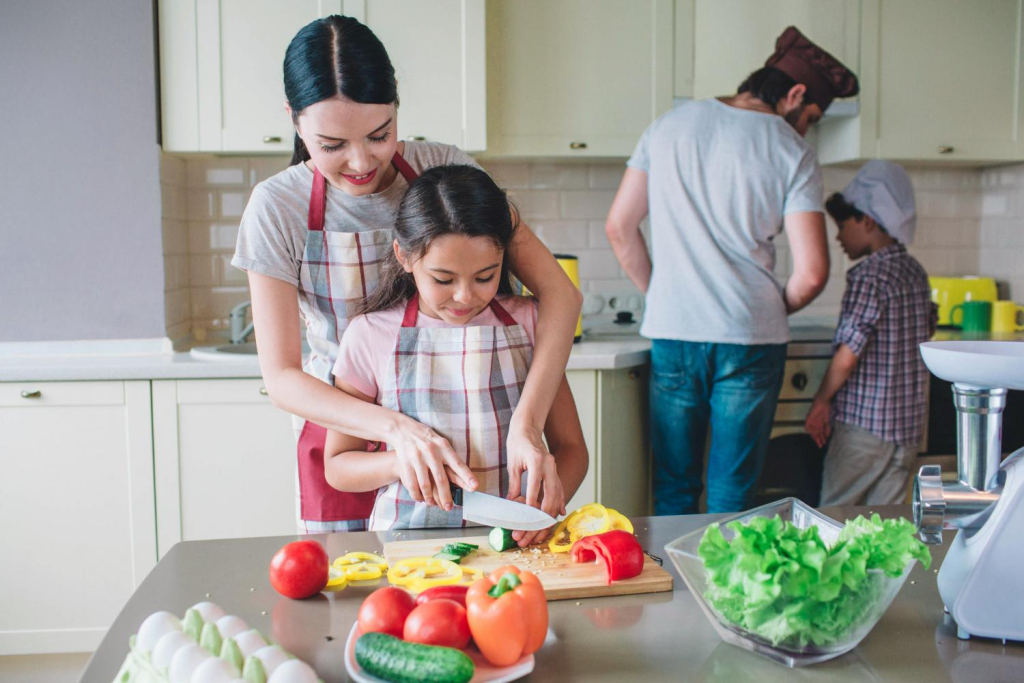
3. Let Kids Help Choose and Prepare Vegetables
Getting children involved in food preparation can make them more curious about what they eat. When grocery shopping, let your child choose vegetables they would like to try. You can ask whether they’d prefer carrots or green beans for dinner, or whether they want broccoli or peas as a side dish for breakfast.
At home, younger children can wash vegetables, mix ingredients, or arrange food on a serving plate. They can even help thaw frozen fruits and vegetables.
Older children may be able to help measure ingredients, prepare simple salads, or follow easy recipes to make snacks with adult supervision.
Cooking together gives children a sense of ownership over family meals and their own health. They may be more willing to taste a dish they helped prepare, even if it contains a new vegetable. It also provides a natural opportunity to talk about health, nutrition, vitamins, and how different foods help the body grow.
4. Add More Veggies to Foods They Already Love
You don’t have to replace your child’s favorite meal with an entirely unfamiliar dish to increase vegetable intake. Instead, look for simple ways to include more veggies in foods they already enjoy.
Add grated carrots or chopped spinach to pasta sauce, mix peas into fried rice, or top homemade meat pizza with mushrooms and other vegetables. You can blend butternut squash into soup or combine vegetables with cheese in an omelet for a quick veggie-filled breakfast. These combinations allow children to explore new tastes while keeping some familiar flavors.
However, one important tip is to try not to hide every vegetable. Offering vegetables in visible, recognizable forms also helps children learn to appreciate their natural tastes and textures. A combination of familiar meals and new recipes can gradually expand a child’s diet.
5. Offer Dips, Sauces, and Different Textures
Sometimes, the problem isn’t the vegetable itself but how it’s prepared. A child who refuses steamed broccoli might enjoy roasted broccoli with a little cheese. Another might prefer crunchy carrots over soft, cooked ones.
Experiment with different cooking methods, including roasting, steaming, sautéing, and blending. Serve raw or lightly cooked vegetables when appropriate for your child’s age and chewing abilities. For younger children, prepare foods in safe, age-appropriate sizes and textures to reduce choking risks.
Dips can also make vegetables more appealing. Offer carrot sticks, cucumber slices, or other suitable vegetables with hummus, yogurt-based dips, or a favorite sauce. Let your child decide whether to dip or eat the vegetables plain.
Remember that tastes change as children grow. A vegetable they reject today may become a favorite after several low-pressure opportunities to try it.
6. Set a Healthy Example During Family Meal Times
Parents and other adults play an important role in shaping children’s eating habits. When kids regularly see adults enjoying vegetables, more fruits, and other nutritious foods, healthy eating becomes a normal part of family life.
Include vegetables in breakfast, lunch, and dinner whenever practical. Add spinach to an omelet, serve carrots with lunch, or include peas and green beans with dinner. Keep fruits and vegetables accessible for snacks, too. Sliced banana, fruit pieces, and age-appropriate vegetable snacks can provide variety throughout the day.
Apart from prioritizing healthy foods, try to eat together when possible. Family meals give children opportunities to observe others, explore different foods, and develop a healthy relationship with eating. Avoid criticizing a child’s choices or comparing their serving with what other children eat.

7. Avoid Turning Vegetables Into a Battle
It’s not about how many vegetables and fruits you can get your child to eat. Pressure can make mealtimes stressful for both parents and children.
Forcing a child to finish more vegetables, offering dessert only as a reward, or threatening consequences for refusing food may create negative associations with eating.
Instead, parents can decide which nutritious foods to offer, while children are encouraged to listen to their hunger and fullness cues.
Provide a balanced diet with a variety of foods, including familiar options, and allow your child to decide how much to eat from what is offered.
Keep portions manageable and offer more when your child is still hungry. If they refuse a vegetable, stay calm and try again another day. Consistency is more useful than expecting immediate results.
If your child has persistent feeding difficulties, an extremely limited diet, or concerns about growth, consult a pediatrician or registered dietitian for individualized guidance.
Small Steps Can Build Healthy Habits for Life
Getting your child to eat vegetables doesn’t require perfect recipes or conflict-free mealtimes every day. Making vegetables fun, offering new foods gradually, involving children in cooking, and setting a positive example can help them become more comfortable with a wider range of nutritious foods.
The goal isn’t to make every child love every vegetable. It’s to help them explore different tastes, enjoy fruits and vegetables as part of a balanced diet, and become more proactive in their health. Healthy foods should enable them to live full and well-balanced lives in the long run.
Creating Healthy Eating Routines at Home With Camella
Healthy habits often begin at home, where families share meals, prepare recipes, and spend time together. A comfortable home environment can make it easier to establish routines that support children’s nutrition and overall well-being, from preparing breakfast together to enjoying family meals after a busy day.
Camella offers health-forward communities across the Philippines where families can find a home suited to their needs and lifestyle. As you build a home for your family’s future, consider how everyday spaces can encourage connection, healthy routines, and meaningful moments together.