



Every February, Tagum City in Davao del Norte shifts its rhythm. Public plazas, cultural halls, parks, and government spaces transform into stages where choirs, rondalla ensembles, marching band units, theatre groups, and contemporary bands perform in front of thousands. For 2026, the musikahan festival runs from January 28 to February 21, unfolding across multiple venues and structured competitions.
For first-time visitors, Musikahan sa Tagum can feel expansive. This guide breaks down the history, schedule, venues, and expectations for 2026 so you can experience the festival with context and confidence.
What Makes the Musikahan Festival in the Philippines’ Music Capital
Before diving into the 2026 schedule, it helps to understand why Tagum City is widely referred to as the music capital of the Philippines and how the festival shaped that identity.
The Origin and History of Musikahan sa Tagum
Musikahan sa Tagum began in the early 2000s as a city-led cultural initiative designed to institutionalize music and arts programming. Rather than limiting performances to a single celebration day, the city government developed a structured annual festival centered on competitions, workshops, and community participation.
Over the years, the event expanded in scale and format. School-based choirs, rondalla groups, and bands became regular participants. Barangays formed their own cultural contingents. The Tagum Tourism Council worked alongside the city government to position the festival as both a cultural platform and a tourism driver within Davao del Norte.
Through consistent programming, Tagum developed a reputation for producing disciplined performers. Its marching band units and choral groups regularly join regional and national competitions. This sustained participation contributed to the city’s recognition as a music capital, not merely by branding but through measurable presence in competitive contexts across the country.
The festival’s history shows long-term planning. Each year builds on previous editions, refining categories and expanding opportunities for participants to excel in their chosen field.
How the Musikahan Festival 2026 Continues That Vision
The 2026 edition maintains the multi-week format that has defined recent years. Activities begin on January 28 and culminate on February 21, ensuring broad participation across barangays, schools, and professional ensembles.
February remains central to the celebration, housing the opening ceremony and major competitions. The schedule reflects continuity rather than reinvention. The city government continues to provide logistical support, venue coordination, and structured judging systems.
Participation extends beyond Tagum. Ensembles from various parts of Davao del Norte and other regions of the country travel to compete. This sustained regional engagement reinforces the festival’s long-standing vision of making Tagum a cultural anchor in the south.
The 2026 Musikahan sa Tagum Schedule: What Happens Each Week
The 2026 program unfolds in phases. Early rounds focus on grassroots competition, while the final week highlights national-level events and large-scale performances.
January 28 to February 7: Barangay Musikahan Elimination
The festival begins with Barangay Musikahan elimination rounds. These competitions allow local communities to present their talents before advancing to the city-level grand finale.
Performers represent their barangay in various competition categories, often featuring choral numbers, band performances, and original songs. The structure ensures that the festival remains community-based. It is not limited to professional ensembles but open to local participants who prepare months in advance.
Schools play a central role. Many performers are students who rehearse after classes, supported by teachers and cultural coordinators. These early rounds offer first-time visitors a closer look at Tagum’s grassroots music culture before the crowds peak.
February 7 to 8: CCP Pasinaya Festival Participation
During this period, Tagum joins broader arts programming linked to CCP Pasinaya. Activities may involve collaborative performances or exchanges that connect local artists to national cultural platforms.
This segment highlights Tagum’s participation in wider Philippine arts networks. It situates the city within broader cultural contexts while giving local talents exposure beyond municipal boundaries.
For participants, the experience strengthens performance discipline. For audiences, it provides access to diverse styles that expand beyond strictly local repertoire.
February 9 to 15: Musikahan at Papuri
Held at the Tagum City Trade and Exhibition Center at Rotary Park, Musikahan at Papuri blends performance with commerce and community engagement.
The venue becomes a gathering site where families, students, and visitors move between live music, exhibit booths, and food stalls. Nearby malls and commercial establishments often experience increased foot traffic during this week, reflecting the festival’s economic impact.
The open layout allows audiences to listen casually while exploring the site. This segment bridges formal competition and relaxed entertainment, drawing steady attendance before the final week.
February 16: Grand Opening Ceremony at Tagum City Hall Atrium
The official opening ceremony takes place at the Tagum City Hall Atrium along J.V. Ayala Avenue in Barangay Apokon.
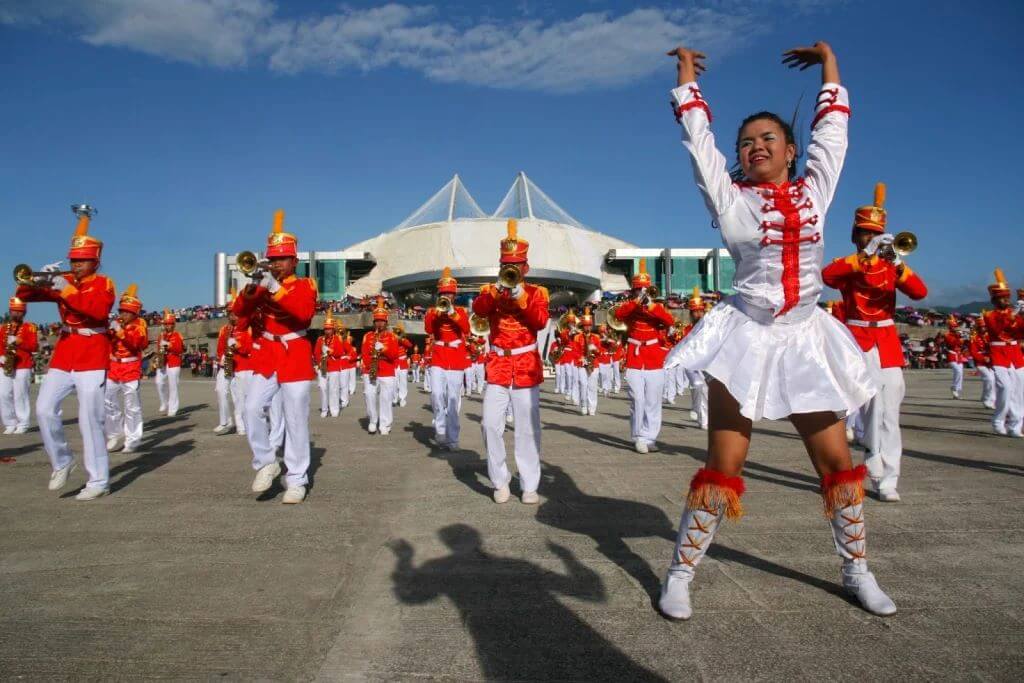
This program formally signals the festival’s peak. City government officials, cultural leaders, and invited performers attend. A marching band presentation often sets the tone, filling the atrium with coordinated rhythm and sound.
The ceremony affirms institutional support. It reinforces the city’s long-term vision for sustaining music education and performance opportunities for its people.
February 17 to 21: Major Competitions and Signature Events
From February 17 onward, the schedule intensifies with high-profile competitions and concerts.
The National Rondalla Competition gathers string ensembles from across the country. Precision, balance, and melodic clarity define this performance category. Judges evaluate technical control and interpretation rooted in Filipino musical history.
Musiclash 2026, staged at the City of Tagum Cultural Center, features contemporary bands. This competition provides a platform for modern arrangements and youth-driven expression, expanding the festival’s musical range.
Meanwhile, The Jukebox Musicals highlights school-based theatre productions built around curated song selections. Participants perform narrative pieces that combine acting, choreography, and vocal delivery.
From February 18 to 20, the Himig Handog International Choral Grand Prix draws choirs into formal competition. The acoustic environment of Herminigildo C. Baloyo Hall supports controlled choral performance, allowing ensembles to demonstrate tonal blending and interpretive depth.
At San Agustin Botanical Park, the Mindanao Earth Music Camp runs concurrently, offering workshops in an outdoor field setting. Participants refine technique through collaborative sessions and guided mentorship.
On February 21, the Barangay Musikahan Grand Finale returns to the Tagum City Hall Atrium, where top finalists compete for final honors.
The festival closes with the Rock n’ Core Concert at the City of Tagum Cultural Center. This culminating performance celebrates the collective success of the 2026 Musikahan Festival.
Experiencing Musikahan Festival 2026 as a First-Timer in Tagum City
Beyond understanding the schedule, first-time visitors should prepare for logistics, venues, and crowd dynamics.
Where Events Take Place Across the City
Major venues include the Tagum City Hall Atrium, the Tagum City Trade and Exhibition Center, the City of Tagum Cultural Center, and San Agustin Botanical Park.
These sites are accessible via primary roads within the city. Traffic advisories and public notice updates are typically released by the city government during peak days.
Residential communities near central corridors benefit from proximity to festival venues. Developments such as Camella Tagum Trails are situated within reach of key roads that link to cultural centers, allowing residents to engage with festival events without leaving the city core.
What to Expect from Performers, Participants, and Competition Categories
Expect diversity in style and age group. School choirs, community bands, rondalla ensembles, and theatre casts perform across categories.
Songs range from traditional Filipino compositions to contemporary arrangements. Judges evaluate performance based on technique, stage presence, and interpretation. Scoring systems are structured, often documented in downloadable files from official sources for transparency.
Participants train months in advance. Many aim not only to win but to refine skills that allow them to excel in future competitions beyond Tagum.
How Thousands of People Navigate the Festival Week
Attendance rises sharply during the final week of February. Thousands gather nightly, particularly for choral finals and the closing concert.
Visitors are encouraged to monitor official social media pages or the Tagum tourism site for updates, venue maps, or a link to live stream video coverage when available.
Arriving early secures better seating. Most events remain open to the public, though certain competitions may implement controlled entry based on capacity.
Beyond the Stage: Community, Home, and Cultural Vision
Musikahan is rooted in people. Barangays rally behind representatives. Schools invest in rehearsal time. Families attend nightly events together. Planning for each edition often begins months in advance, sometimes as early as September of the preceding year. This forward planning ensures continuity.
For first-time visitors in 2026, the experience extends beyond individual performances. It reveals a city that has embedded music into its civic identity. Through structured competition, sustained participation, and public support, Tagum continues to carry its melody into each new year.