



Image source: Freepik
Introduction
Across the Philippines, the arrival of Holy Week signals a profound shift in daily life. Roads become quieter, families gather, and churches fill with devotees reflecting on the passion, death, and resurrection of Christ. Known locally as Mahal na Araw, this solemn week holds deep meaning for a country where the majority of the population identifies as Catholic and where faith shapes many aspects of culture.
The Catholic Church observes Holy Week within the liturgical calendar, beginning on Palm Sunday and ending on Easter Sunday, or Pasko ng Pagkabuhay. This year, Holy Week will be observed from March 29 to April 5, 2026. Throughout the week, communities across the country participate in rituals that commemorate the life of Jesus Christ, his journey to the cross, and the promise of new life through the resurrection.
While specific practices vary across communities and towns, the essence of Filipino Holy Week traditions remains rooted in prayer, reflection, and shared devotion. Streets often fill with processions, churches host prayers and readings, and families intentionally spend time together reflecting on faith. These traditions in the Philippines combine solemn observance with meaningful community gatherings that highlight the enduring place of religion in Filipino society.
Here are nine meaningful ways Filipinos observe this sacred period.
Attending Palm Sunday Mass as Holy Week Starts
The beginning of Filipino Holy Week traditions is marked by Palm Sunday, the day that commemorates Jesus’s entry into Jerusalem.
On this day, Holy Week begins as churchgoers bring intricately woven palm fronds to Mass for a blessing. Parishioners gather outside churches, where priests sprinkle holy water on the faithful’s palms before they carry them inside. These palms symbolize the branches laid on the road as people welcomed Christ during his arrival in the ancient city.
The sight of families holding woven palms has become one of the most recognizable Holy Week traditions in the Philippines. Vendors often sell decorative fronds outside church gates, creating an atmosphere that blends solemn reflection with community activity.
In many towns, the blessed palms are later placed near doorways or windows at home. Some Filipinos believe these palms help protect households from storms or evil spirits, reflecting how religious beliefs intertwine with long-standing cultural practices.
Palm Sunday gatherings also highlight how faith remains a shared experience. Families attend Mass together, marking the start of the Filipino Holy Week and preparing spiritually for the days ahead.
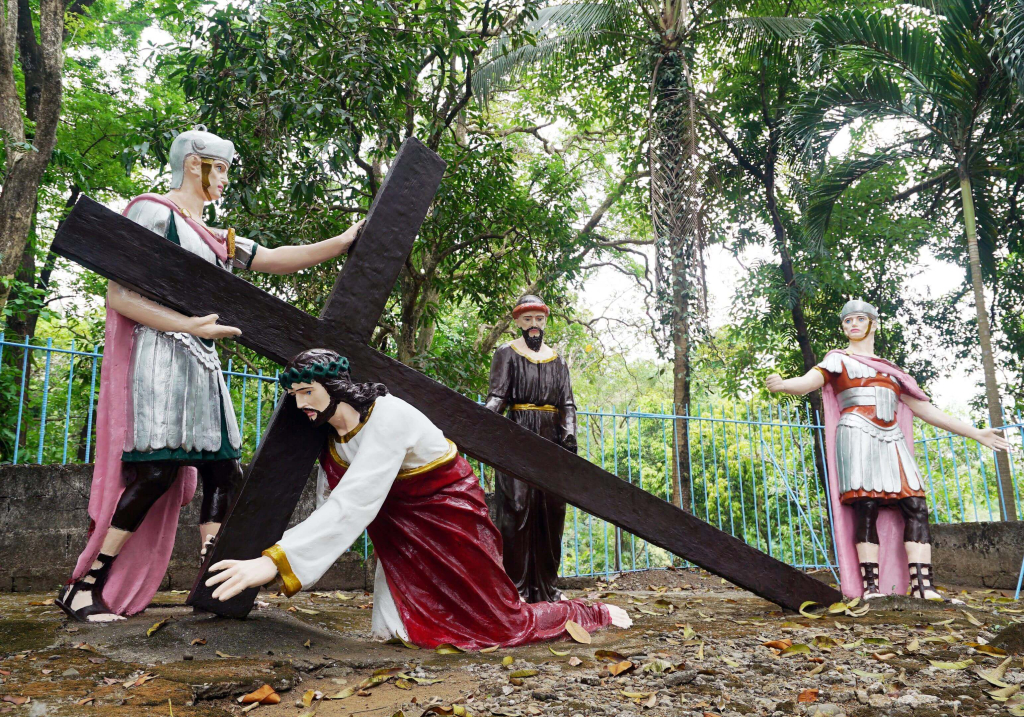
Image source: https://www.pna.gov.ph/photos/53917
Visiting the Fourteen Stations During Holy Monday Reflection
After Palm Sunday, the quieter days of the early week invite deeper reflection. On Holy Monday, many Filipinos visit churches to pray through the fourteen stations of the cross, a devotional practice that traces the final moments of Christ’s passion.
Each station represents a moment in Jesus’s journey toward the crucifixion. From his condemnation to his burial, the stations guide worshippers through prayer and contemplation. Participants pause before images or sculptures that depict the suffering of Jesus Christ, reflecting on the meaning of sacrifice and forgiveness.
For many Filipinos, this tradition offers a chance to slow down during the solemn occasion of Semana Santa. Families and individuals walk quietly through the stations, meditating on the holy wounds endured during the passion.
This devotional practice also reinforces the strong connection between personal prayer and community worship. The act of moving from one station to another mirrors the spiritual journey toward the resurrection, reminding believers that the events of Holy Week form a single narrative within the Christian faith.
Participating in Visita Iglesia Across Seven Churches
Another cherished practice during Filipino Holy Week is Visita Iglesia, in which devotees visit seven churches to pray.
This tradition often takes place from Holy Monday through Maundy Thursday, when families and groups visit different parishes to reflect on the passion of Christ. Participants typically move from one church to another while praying or meditating on the fourteen stations.
In historic districts and older communities, the journey often leads people through narrow streets, where centuries-old churches stand close together. The atmosphere becomes especially meaningful in heritage towns where pilgrims walk together under the summer sun.
For residents of developing areas such as those surrounding Camella Monteia Quezon, the practice of Visita Iglesia often includes visits to nearby parishes within the province. Families may travel between churches before returning home to continue their prayers.
Beyond the physical journey, Visita Iglesia encourages believers to reflect on Jesus’s sacrifices and the meaning of faith. For many Filipinos, the experience represents a personal pilgrimage within their own community.
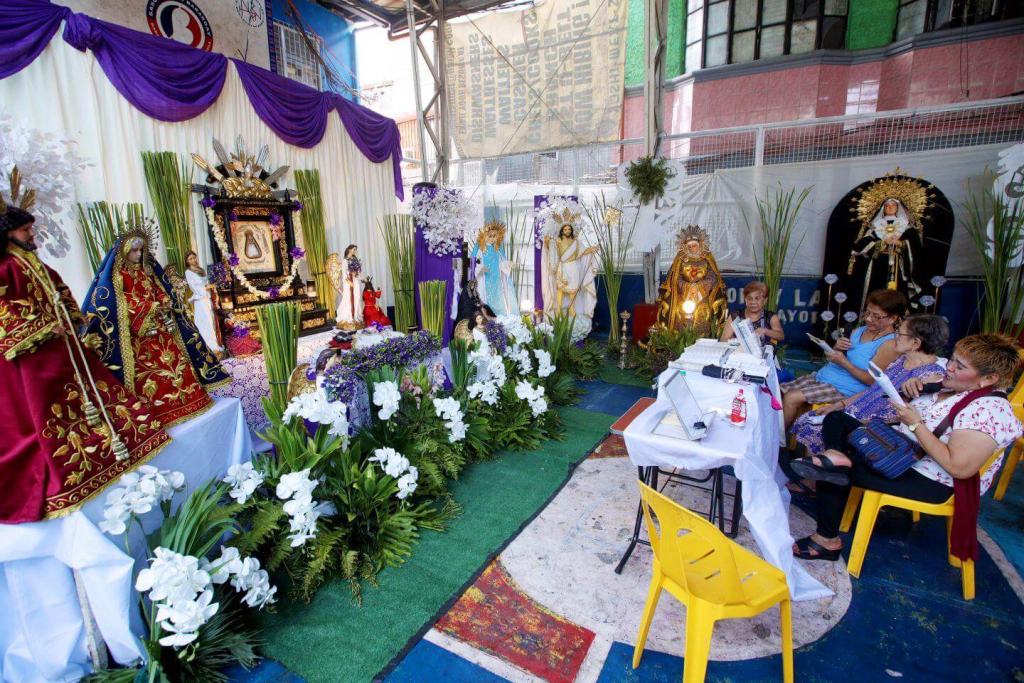
Image source: https://www.pna.gov.ph/photos/75923
Listening to Pabasa ng Pasyon During Holy Wednesday
As Holy Wednesday arrives, communities begin one of the most distinctive traditions in the Philippines: the pabasa ng pasyon.
This ritual involves continuous chanting of verses from the Pasyon, a narrative poem recounting the life, suffering, and death of Jesus Christ. The chanting often lasts for hours or even days, with volunteers taking turns reading or singing the verses in a melodic rhythm.
The pabasa ng pasyon typically takes place in chapels, homes, or community spaces. Participants sit around a decorated table while the reading continues day and night, emphasizing communal participation in remembering Christ’s passion.
For those who participate, the tradition reflects deep devotion and respect for the events remembered during Semana Santa. It also highlights the strong oral storytelling tradition within Filipino culture.
In many communities, neighbors bring food and drinks to support those involved in the chanting. The atmosphere remains respectful and reflective, underscoring the significance of this moment in the Filipino holy observance of Holy Week.
Observing Maundy Thursday Mass and the Washing of the Feet
The observance of Maundy Thursday, known locally as Huwebes Santo, marks an important transition in Holy Week.
During Mass, the Catholic Church reenacts the moment when Jesus washed the feet of his disciples before the Last Supper. The ritual symbolizes humility, service, and compassion. Priests replicate this act by washing the feet of selected parishioners, reminding worshippers of the values Jesus Christ taught.
Huwebes Santo also commemorates the Last Supper in Jerusalem, where Christ shared a meal with his followers before his arrest. This moment begins the most solemn phase of Christ’s passion.
Many Filipinos also observe fasting or avoid meat as part of their spiritual preparation for Good Friday. The day becomes an opportunity to reflect on sacrifice and the meaning of faith.
Across the Philippines, churches remain open late into the evening as believers continue their prayers. The atmosphere grows more contemplative as the week moves closer to the remembrance of the crucifixion.
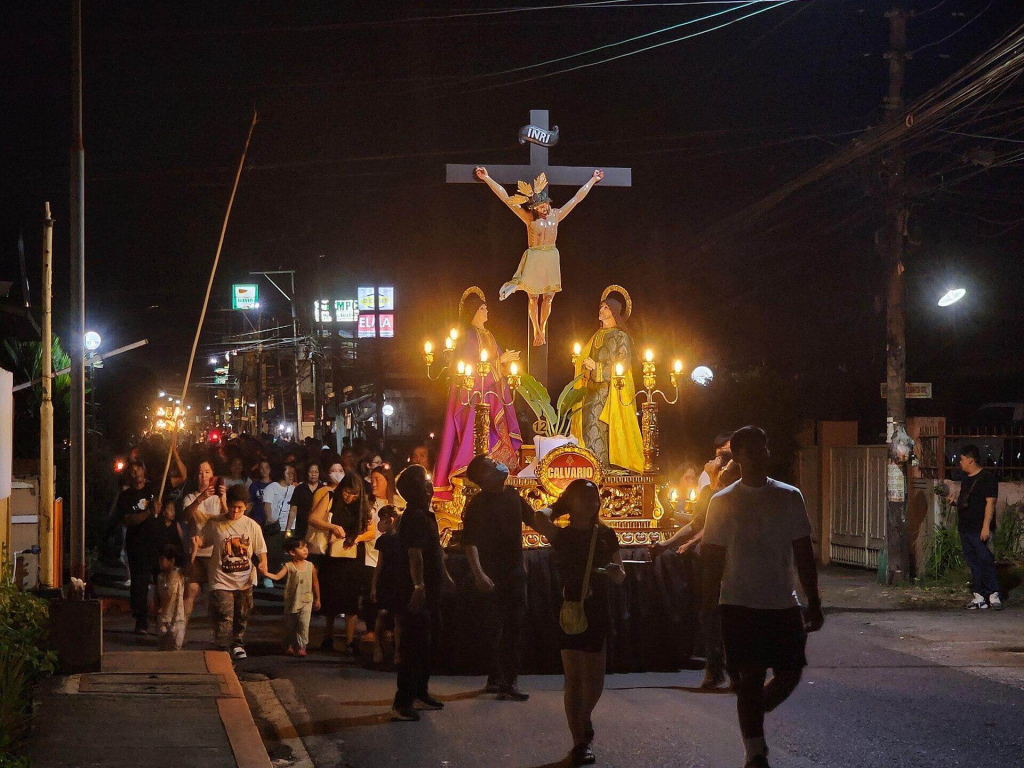
Image source: https://commons.wikimedia.org/wiki/File:Ibaan_Good_Friday_Procession_Calvary_carozza_2024-03-29.jpg
Witnessing Good Friday Processions and Passion Plays
The most solemn day of Filipino Holy Week traditions arrives on Good Friday, or Biyernes Santo.
Biyernes Santo Processions Honoring Christ’s Passion
Across many towns, elaborate procession events move slowly through the streets. Religious statues depicting Jesus, the Blessed Virgin Mary, and other biblical figures are carried through communities accompanied by brass bands and solemn hymns.
Participants walk alongside the images, reflecting on the crucifixion and death of Christ. The Blessed Virgin Mary, often dressed in mourning attire, symbolizes a mother grieving for her son.
Passion Play Reenactments of the Crucifixion
In several provinces, communities organize a dramatic passion play depicting the final hours of Jesus Christ. The re-enactment portrays scenes from the trial of Jesus to the crucifixion, sometimes featuring performers dressed as Roman soldiers.
These performances attract large audiences who watch the events unfold as a reminder of the suffering endured during Christ’s passion.
Acts of Devotion
In certain areas, some participants express penance through self-flagellation or penitencia as an act of repentance. While this practice is not encouraged by the Catholic Church, it continues to appear in a few communities as an expression of intense devotion.
Good Friday observances also include reflections on the seven last words spoken by Jesus on the cross and sermons that encourage contemplation of faith, suffering, and redemption.
Observing Silence and Reflection on Black Saturday
After the solemn events of Good Friday, the atmosphere becomes quieter on Holy Saturday, often called Black Saturday.
During this time, the faithful remember the period between the death of Christ and his resurrection. In many parishes, church bells remain silent throughout the day, emphasizing the sense of mourning.
Filipinos typically spend Black Saturday in reflection or prayer. Some families avoid loud celebrations, recognizing the day as part of the solemn week leading toward the promise of Easter.
The silence observed during this period highlights the emotional pause between sorrow and hope. It reminds believers of the waiting period before the resurrection of Christ.
Attending the Easter Vigil Before Easter Sunday
As night falls on Holy Saturday, churches prepare for the Easter Vigil, one of the most significant liturgies in the Catholic Church.
The ceremony begins in darkness before a new fire is lit outside the church. From this flame, candles are distributed to the congregation, symbolizing the arrival of the risen Christ. The ritual represents the triumph of light over darkness and the promise of renewed faith.
During the Easter Vigil, scripture readings recount the story of salvation, culminating in the proclamation of the resurrection. The moment signals the transition from mourning to hope within the liturgical calendar.
For many Filipinos, attending the vigil reinforces the spiritual meaning of the entire Filipino Holy Week, reminding worshippers that the story does not end with the cross, but with the resurrected Christ.
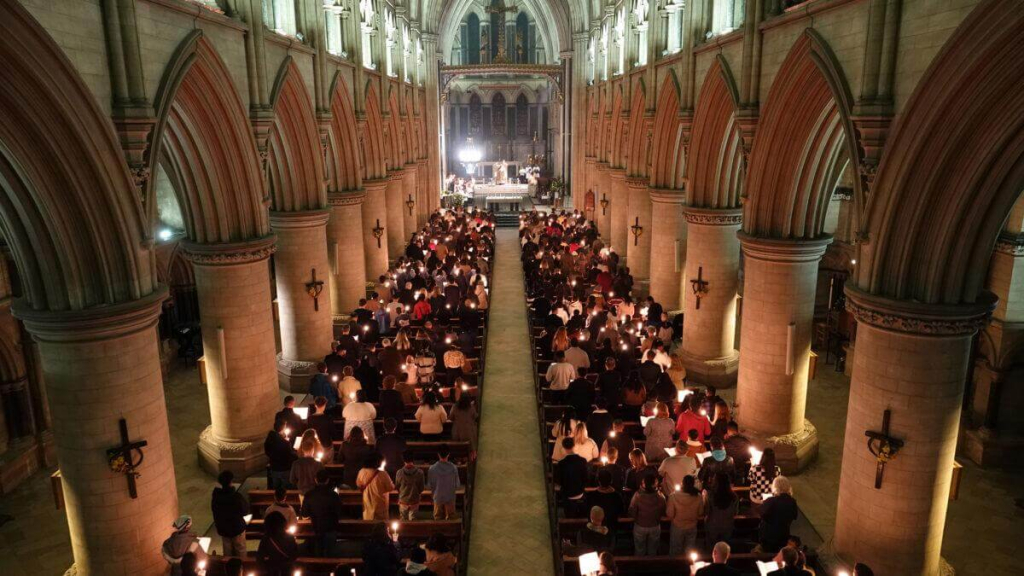
Image source: https://www.rcdea.org.uk/easter-vigil-a-radiant-celebration-of-new-life/
Celebrating the Resurrection on Easter Sunday
The solemn atmosphere of the week transforms into a joyful celebration on Easter Sunday, known locally as Pasko ng Pagkabuhay.
Many communities hold the Salubong, a traditional event that dramatizes the meeting between the risen Christ and the Virgin Mary. Two separate processions form before dawn. One carries the image of the resurrected Christ, while the other carries the statue of Mary, who often wears a black veil symbolizing mourning.
When the two processions meet, the veil is lifted, revealing the joyful reunion between mother and son. In many towns, children dressed as angels scatter flower petals while singing hymns that celebrate the resurrection of Christ.
The ceremony concludes with a festive Mass that welcomes the triumph of Easter and the promise of renewal represented by the resurrection. For Filipinos, the celebration of ng pagkabuhay reminds believers that faith ultimately leads to hope.
Conclusion
The observance of Filipino Holy Week traditions reflects the deep spiritual roots of the Philippines. From Palm Sunday to Easter Sunday, the days of Semana Santa invite believers to reflect on the life, passion, and resurrection of Christ through prayer, reflection, and communal gatherings.
Across the country, churches, streets, and homes become spaces of shared faith. The chanting of the pabasa ng pasyon, solemn procession events on Biyernes Santo, and the joyful reunion of the Salubong illustrate how religion and culture remain closely connected.
These practices continue to shape the way Filipinos understand devotion, forgiveness, and renewal. As families gather and communities unite during this sacred season, the message of Jesus Christ remains central: that through sacrifice and faith, hope and new beginnings are always possible.